
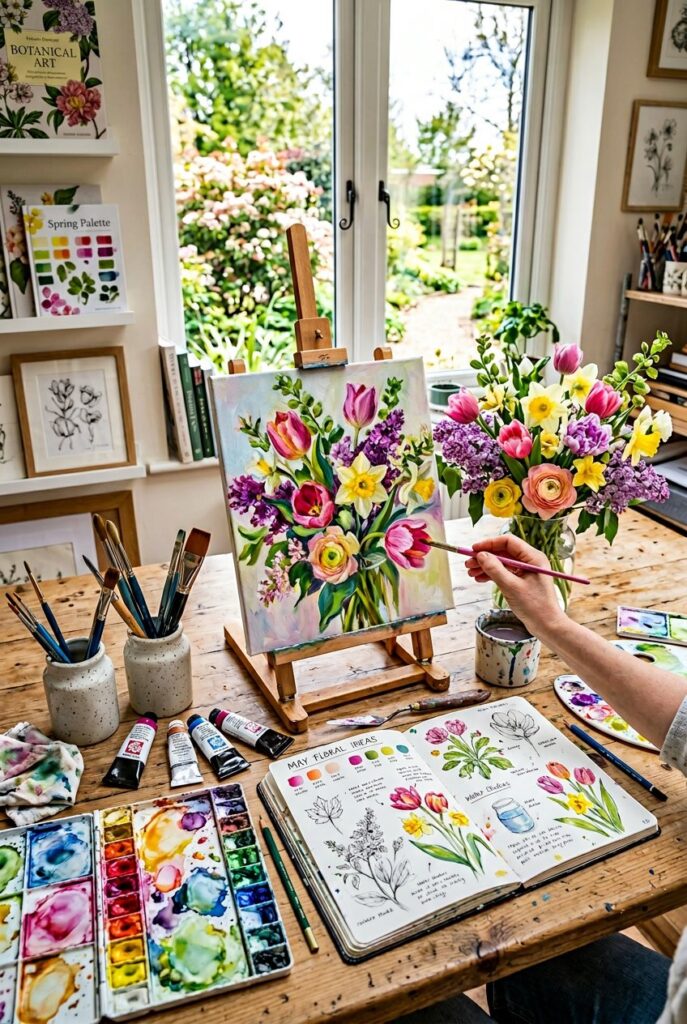
May brings fresh light and easy subjects that make painting feel simple and fun. You can capture spring flowers, rainy scenes, and small, bright studies that work in watercolor, acrylic, or mixed media to match your time and skill level.
Pick a few basic supplies, a short prompt list, and a simple technique, and you’ll have a month of satisfying May paintings ready to share or display.
This post gives quick ideas and clear steps so you can jump in today. Whether you want tiny daily pieces, florals, mermaid themes, or beginner-friendly techniques, there’s something here.
Expect short project ideas, supply tips, and ways to show your work that keep you inspired all month.
Key Takeaways
- Start with a small, simple supply kit that fits your preferred paint type.
- Focus on short, themed prompts like flowers or small scenes for daily practice.
- Use easy display and sharing options to celebrate and track your progress.
Essential Supplies and Paint Types for May Painting
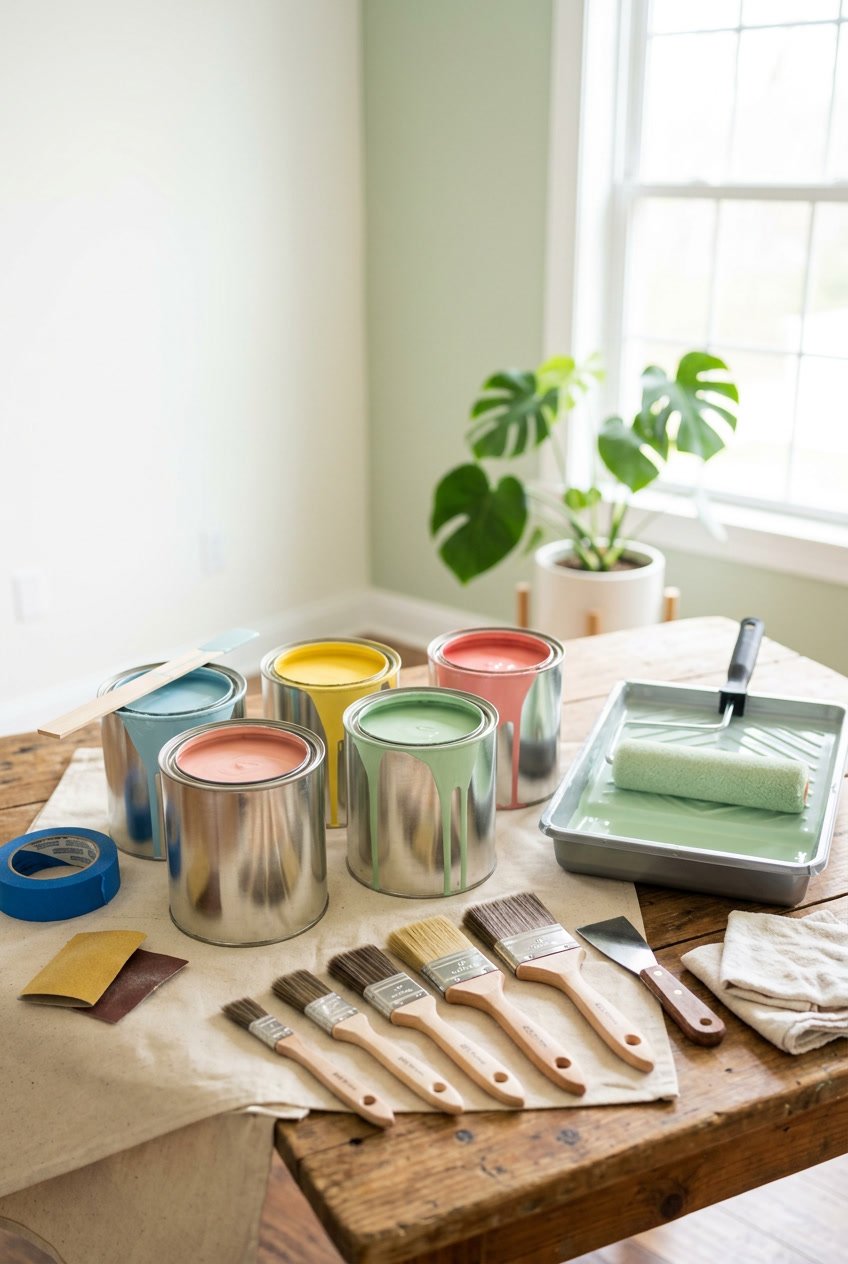
Spring colors, quick drying times, and simple setups work best for May projects. Pick a paint that fits the look you want, choose a surface that holds that paint, and grab a few reliable tools to keep things tidy and fast.

Size: 7 Pieces Full Size Bed in a bag including 1 Comforter 79"x 90", 1 Fitted Sheet 54"x75"x16", 1 Flat Sheet 96"x81", 2 Pillow Cases 30" x 20",2 Throw Pillow Covers,Covers Only 18"x 18".


Choosing Between Watercolor and Acrylic
Watercolor gives soft, translucent washes that suit blooming scenes and light skies. Use 300 gsm cold-press paper or a watercolor block to avoid buckling.
Select pan or tube paints from brands with good lightfastness. A starter palette of Permanent Rose, Ultramarine, Sap Green, and Yellow Ochre covers most spring palettes.
Get a few synthetic round brushes (sizes 4–10) and a flat wash brush for larger skies. Bring a spray bottle and a mixing tray for rewetting and blending.
Acrylic dries fast and holds bright, opaque color for bold florals and garden details. Use acrylic-specific canvas panels or gesso-primed canvas so paint won’t sink or peel.
Choose heavy body or student-grade tubes; Cadmium Red/Red Medium, Phthalo Blue, Hansa Yellow, and Titanium White form a flexible mixing set. Use synthetic filbert and round brushes, a palette knife for texture, and stay-wet palettes if you need longer working time.
Selecting the Right Canvas or Surface
If you pick watercolor, buy 140 lb (300 gsm) cold-press paper for texture and absorbency. Blocks glued on all sides let you paint flats without stretching.
Sheets let you tape edges for cleaner borders. For acrylic work, pick stretched cotton or linen canvases in a medium tooth.
Canvas panels give a rigid surface that’s cheaper and easier to store. If you want to experiment with mixed media—watercolor plus acrylic details—use mixed-media paper or a canvas primed with gesso so it takes both wet and thicker layers.
Size matters. Start with 8×10 or 11×14 for quick May studies.
Must-Have Tools and Materials
Brushes: synthetic rounds (sizes 2, 6, 10), a 1″ flat, and a filbert for petals and edges. Keep a small mop or wash brush for big skies.
Paints: a limited palette of 4–6 tubes or pans (see color lists above). Buy at least one opaque white for acrylics; watercolors use lifting and layering instead.
Surfaces: watercolor block (140 lb) or gessoed canvas panel (8×10, 11×14). Tape, clips, or a small tabletop easel help steady your work.
Extras: palette or mixing tray, palette knife, jar for water, paper towels, masking tape, and an apron. For outdoors (plein air), bring a pochade box or portable sketchboard and a small folding stool.
Spring Flower Painting Ideas
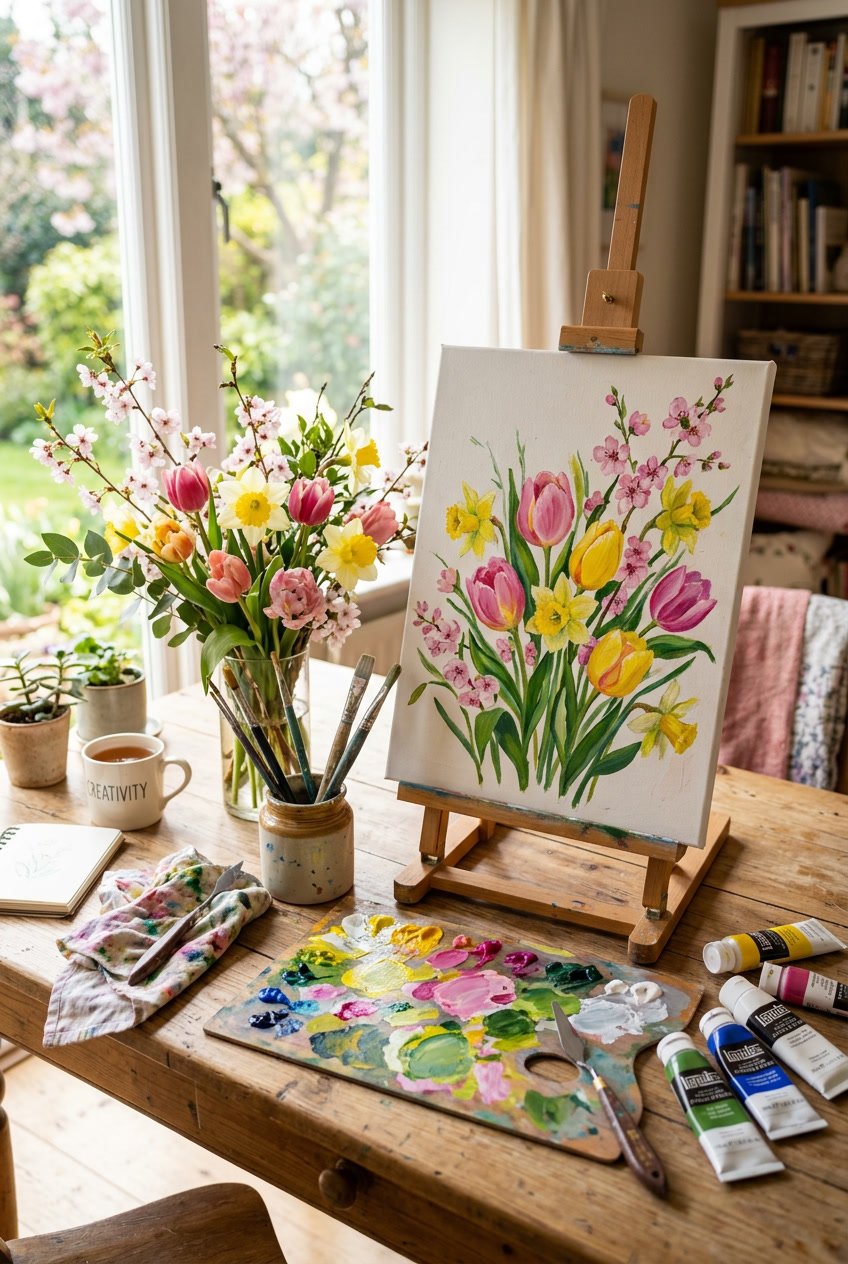
You’ll find quick, hands-on projects that use common supplies and simple steps to make bright floral art. These ideas use easy shapes, layered colors, and textures you can repeat or change for your skill level.

[Cold Press Process]: This watercolor paper 9x12, features a fine-to-medium grain texture that offers excellent pigment retention, perfectly capturing the diffusion and sedimentation effects of watercolor. Suitable for both wet-on-wet and dry-brush techniques, it ensures smooth and natural brushstrokes. Watercolor paper pad 9x12 has a unique cold-pressed texture that enhances color vibrancy and gradation, adding depth to your artwork. Set of 105 sheets, 140 lb/300 gsm, durable and tear-resistant
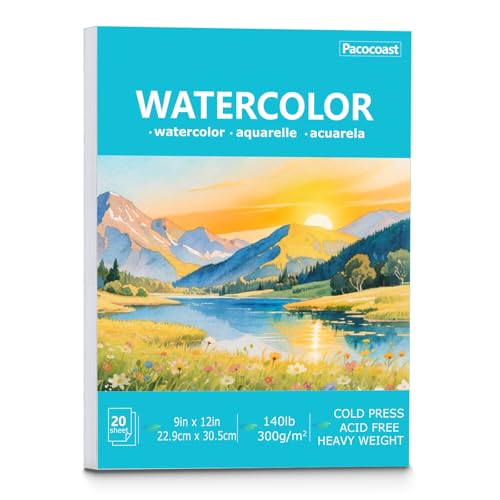
【Premium Heavyweight Watercolor Paper】 This pack includes 20 sheets of 9"" x 12"" professional-grade, heavyweight (140 lb / 300 gsm) watercolor paper. It pairs exceptional durability with superior handling to warping and buckling, performing brilliantly with wet-on-wet, drybrush, mixed media, and all painting techniques. It's the perfect choice for artists, illustrators—and an exceptional gift for anyone on their artistic journey.

100% Cotton Watercolor Paper: cotton paper is able to absorb water and pigment more readily than other types of paper, this will ensure that you get the best absorbency and color vibrancy when you use your watercolors and other wet media.
Paper Plate Flowers
Paper plate flowers give you a cheap, sturdy base to paint large, bold petals. Cut a paper plate into petal shapes or leave it whole and paint concentric rings for petals.
Use acrylic or tempera paint for full coverage. Start with a base coat, let it dry, then add darker strokes at the petal edges for depth.
Add texture by dabbing with a sponge or crumpled paper. For centers, glue on buttons, pom-poms, or a dab of thick paint mixed with sand.
If you want a hanging piece, punch a hole at the top and tie ribbon or twine. You can make a bouquet by mounting several plates on a backing board and painting stems and leaves around them.
Cherry Blossom Trees
Cherry blossom trees work well on canvas or heavy paper and rely on simple brushwork and color layering. Paint a thin, branching trunk with a small flat or round brush in brown or dark gray.
Let the trunk dry, then mix two or three pink tones for the blossoms. Use a round brush, sponge, or fingertip to stamp clusters of blossoms along the branches.
Leave small gaps for highlights and add tiny white or light-pink dots in the center of some flowers to suggest light. For a soft background, wash the paper with pale blue or lavender before adding the tree.
Try adding a few falling petals with quick, light brushstrokes to give motion.
Bubble Wrap Flower Art
Bubble wrap makes textured petal prints that look great on cards and mixed-media pieces. Cut the bubble wrap into petal or leaf shapes, or use a larger piece for layered textures.
Spread a thin layer of acrylic paint on a palette, press the bubble wrap lightly into the paint, and stamp onto paper. Work in layers: stamp a base color first, let it dry, then add smaller details with a fine brush.
Use metallic or pearlescent paint on top for shimmer. Combine bubble-wrap prints with hand-painted stems and centers to integrate the texture into a full composition.
Clean the bubble wrap after use so the shapes stay crisp for future prints.
May Crafts and Seasonal Projects
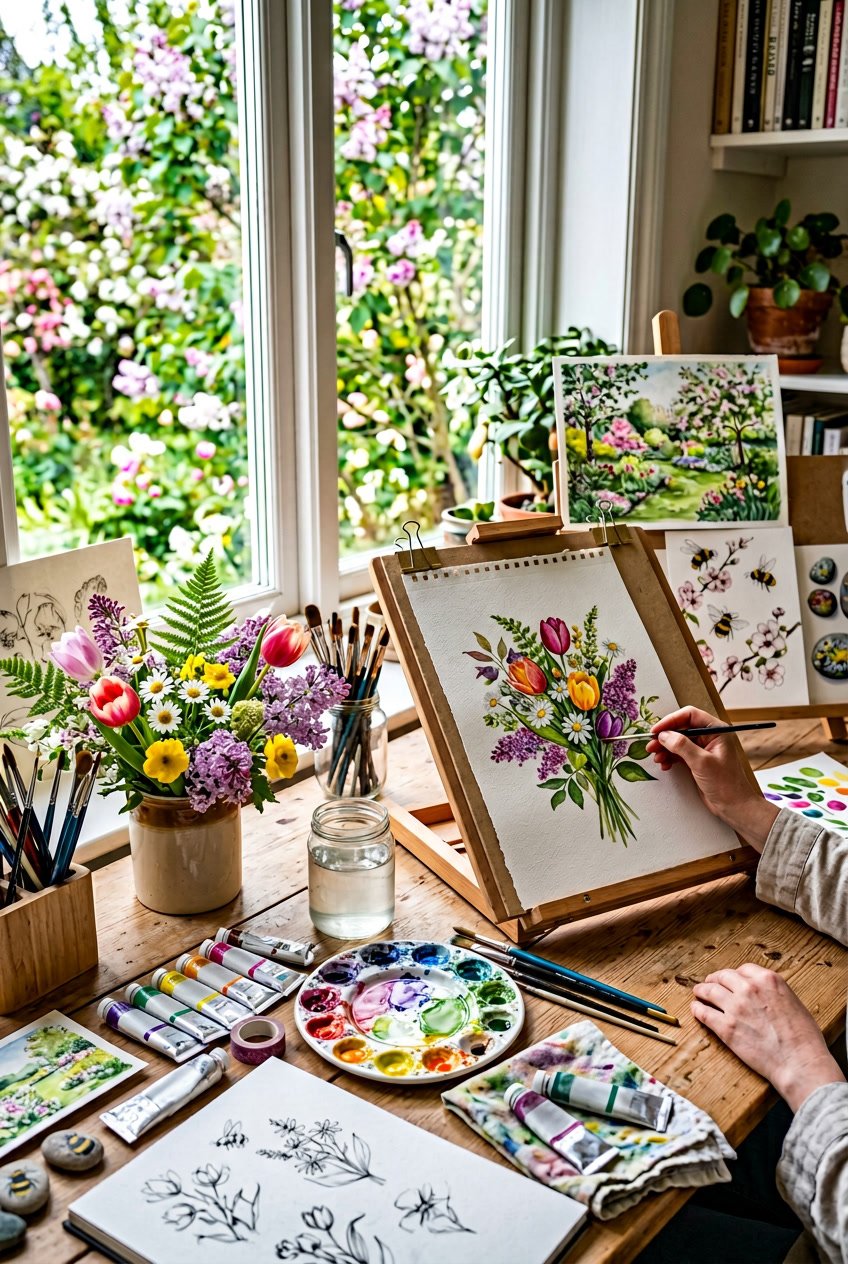
May brings simple, hands-on painting projects that celebrate spring, mom, and being outside. You’ll find gift-ready crafts, nature studies that use real leaves and flowers, and outdoor art ideas that work with washable paints and paper plates.

CONVENIENT SIZE - This outdoor acrylic paint set includes 16 - .1667 fl oz paint pots as well one brush. The colors in this paint set include: Delta Outdoor Royal Blue, Sky Blue, Light Blue, Pink, Purple, Terra Cotta, Brown, Black, Dark Green, Light Green, Turquoise, Magenta, Light Brown, Red, Yellow and White
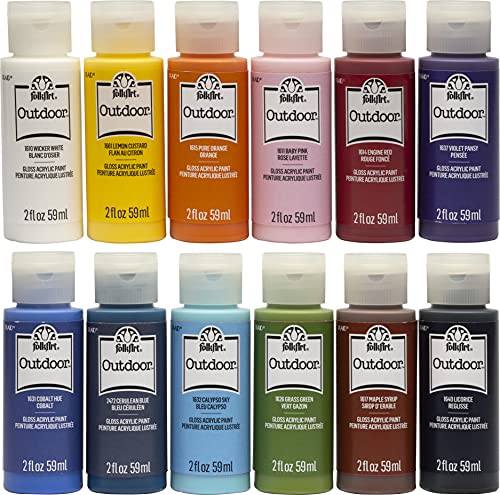
CONVENIENT SIZE - This outdoor acrylic paint set includes 12 - 2 oz bottles of outdoor craft paint. The colors in this paint set include: FolkArt Wicker White, Lemon Custard, Baby Pink, Pure Orange, Engine Red, Violet Pansy, Grass Green, Calypso Sky, Cobalt Hue, Cerulean Blue, Maple Syrup, and Licorice

Nail Art Kits: 24Pcs reusable floral fake nails set includes 24pcs jelly glue stickers, 1 mini nail file and 1 wooden stick
Mother’s Day Crafts and Gifts
Think small, useful gifts that show care. Paint a wooden photo frame with a wash of pastel acrylics, then stencil a date and glue a favorite photo.
Use a palette knife to add texture for a handmade look. Make painted recipe tiles from ceramic squares.
Choose mom’s favorite colors and write a short recipe with a permanent marker after the paint dries. Seal with a clear spray so tiles stay food-safe.
For kids, try painted clay pinch pots. Press a thumbprint to form a small dish, paint with tempera, and add a glitter or floral motif.
Tie a ribbon and a handwritten note for a ready gift.
Nature-Inspired Painting Projects
Use real things from your yard to make art. Press flowers between books for a day or two, then paint over paper and lift the petals to reveal shapes you can outline in ink.
Try leaf printing: coat a leaf with paint, press onto paper, and repeat to make a patterned sheet. Create a color study by collecting five natural items—dandelion, fern, pebble, twig, blossom.
Mix paints to match their hues. Paint each object on small cards and label the color mix.
Try watercolor resist with crayons and flower sketches. Draw with crayon, wash with a light watercolor, and watch the wax repel paint.
Frame your favorites for simple spring décor.
Outdoor Painting Activities
Bring painting outside to avoid mess and capture fresh light. Set up a tray with jars of tempera or washable acrylics, brushes, sponges, and paper plates as palettes.
Use easels or clip paper to a clipboard for sturdier surfaces. Do a plein air session in 20–30 minutes.
Focus on one element—an open blossom, a fence post, or a bird feeder—and do quick studies in different light. Try a collective mural: tape kraft paper to a fence and let each person add a painted panel.
For kids, paint on smooth stones using acrylics and seal for garden markers. Or use sidewalk chalk and watered-down paint to make temporary street art that washes away after rain.
Unique May-Themed Painting Ideas
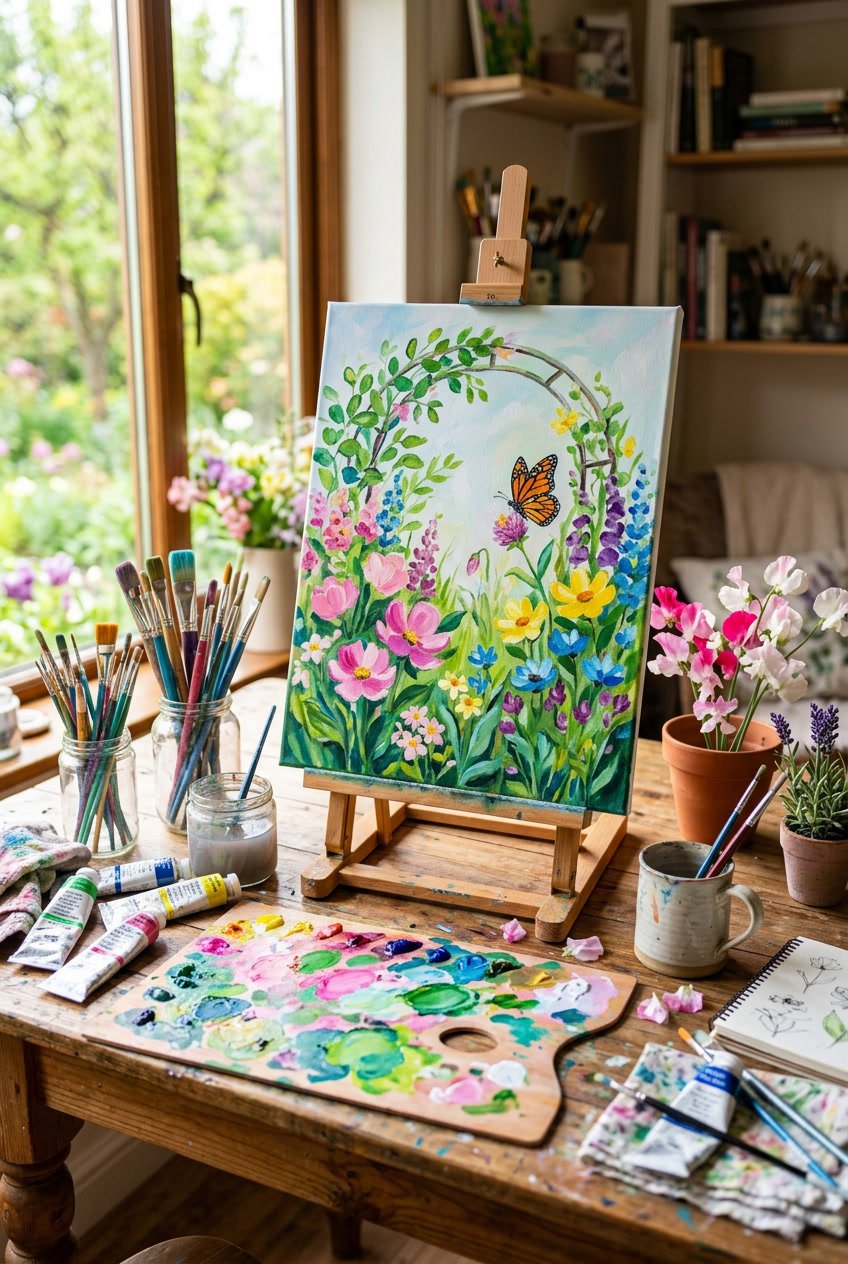
Use bright spring colors, simple shapes, and texture techniques to make lively May paintings. Focus on clear subjects, easy steps, and a small list of supplies to finish each piece.

Quality Material: The mixed media sketchbook is made of recyclable, high-quality 98 lb/160 gsm mixed media paper materials. Sufficient thickness mixed media pad can prevent ink from bleeding through the pages. Each sheet is acid-none multimedia paper, which ultimately prevents the colors from deteriorating or fading. Besides, the hard cardboard made cover and bottom can protect your artistic drawings and sketches. It is not easy to get damaged.
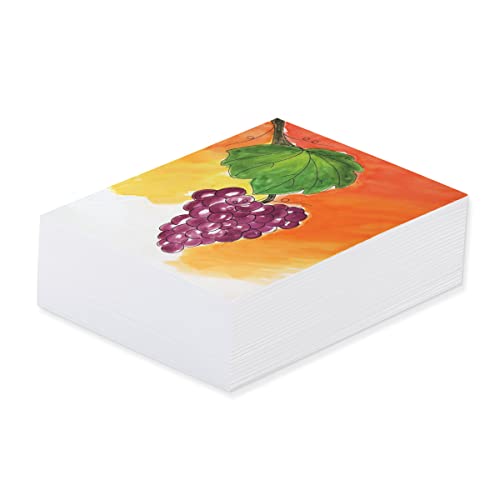
Great choice for all types of media

Bee and Butterfly Art
Paint a close-up bee or butterfly wing study using a 9×12 canvas or watercolor paper. Start with a light pencil sketch to map wing veins or the bee’s body.
For bees, mix warm yellow with a bit of brown for stripes; use a dry brush to add fuzzy texture along the thorax. For butterflies, layer translucent washes of color so the wing patterns show through.
Try these techniques:
- Wet-on-wet watercolor for soft gradients.
- Sponging or stippling with acrylic for textured pollen and fuzz.
- Fine liner or a small round brush for vein and antenna details.
Limit your palette to four colors plus black and white. That keeps the painting readable and helps you practice mixing values and tints.
Add a tiny speckled background to suggest flowers without painting each bloom.
Animal and Wildlife Scenes
Pick a single animal—like a robin, fox, or turtle—and paint it in a small habitat vignette. Compose the scene on a square panel so the subject stays central.
Use reference photos to capture posture and fur or scale texture. Block in large shapes first, then refine eyes and fur patterns last.
Key steps:
- Underpaint in a mid-tone to set value.
- Layer darker marks for shadow and lighter marks for highlights.
- Use a fan brush or dry brush to suggest fur, grass, or feather details.
Keep props minimal: one branch, one rock, or one patch of flowers. This keeps focus on the animal and speeds finishing time.
Use glazing (thin translucent layers) to deepen color without muddying details.
Space and Star Wars-Inspired Paintings
Paint a small space scene or a Star Wars motif like a twin-sun horizon or a simple lightsaber study. Start with a dark background—mix ultramarine and black for deep space.
Add distant stars with a toothbrush flick or a small round brush. Place one bright planet or sun off-center for balance.
Use a thin, glowing edge for lightsabers: paint a bright core, then glaze outward with translucent white or pale color. Create nebulae with soft circular blends of magenta, teal, and violet using sponge or soft brush.
Limit details to major shapes and glow effects. That gives your painting drama without complex realism.
Use acrylic for quick drying glow layers, or oil/glaze if you want richer blending and more time to adjust.
Watercolor and Acrylic Techniques for Beginners
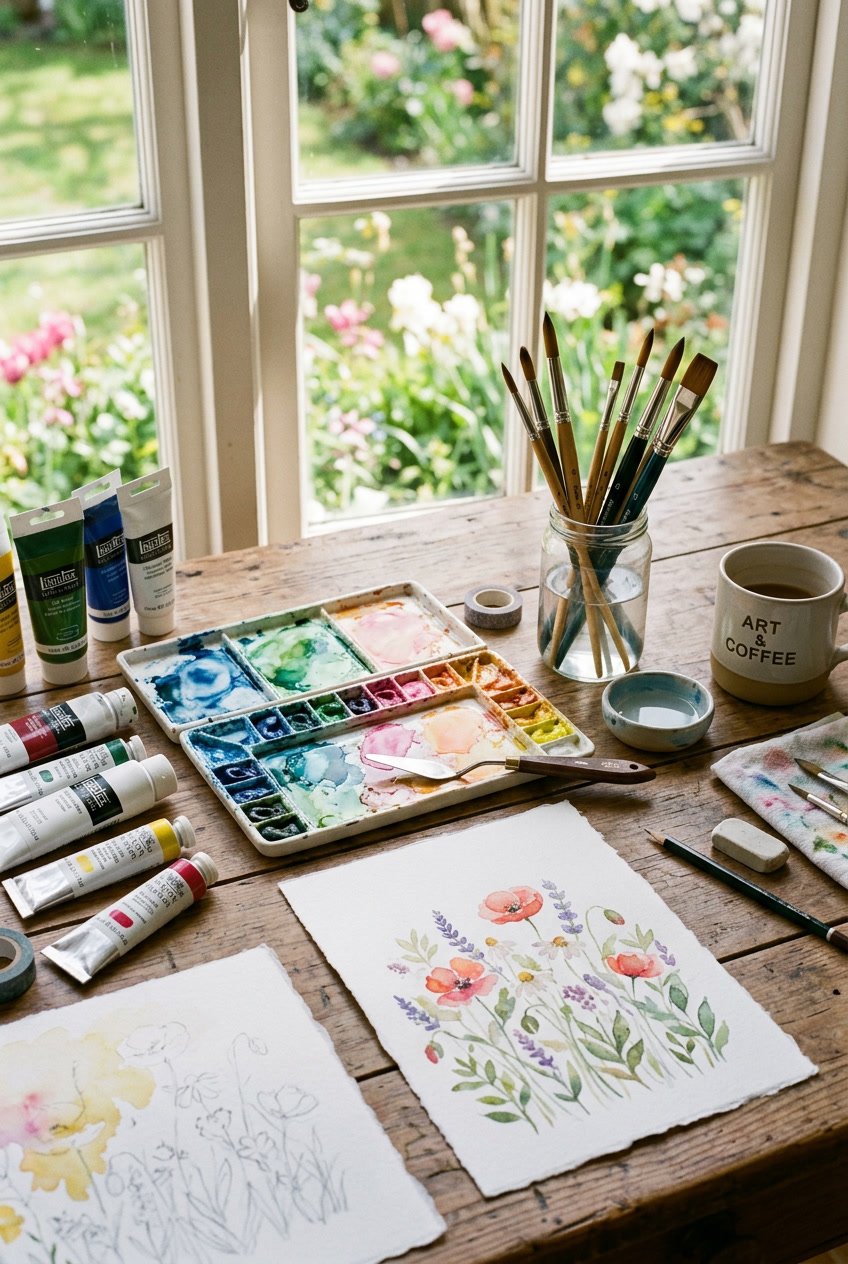
You’ll learn practical ways to start painting in May using water-based media. Focus on simple projects, basic brushwork, and one or two mixed-media tricks that suit spring subjects like flowers and soft skies.

【Canvases for Painting Value Packs】12 packs 11x14 inch blank canvas boards for painting, which is great for artists of kids to adults. A large number of painting canvases art supplies are suitable for school, painting classes, kids DIY craft use, and don't worry about running out of painting supplies for your artwork!

【11x14 Canvas Value Pack】This canvas bulk includes 2 pack11x14 inches blank canvases for painting, perfect painting canvas for kids and Professional painter.

【11x14 Canvas Value Pack】This canvas bulk includes 3 pack11x14 inches blank canvases for painting, perfect painting canvas for kids and Professional painter.
Simple Watercolor Projects
Start with a small palette: three colors (a warm, a cool, and a neutral) plus water and 140 lb (300 gsm) paper. Practice wet-on-wet washes for skies by dampening the paper then dropping in color; watch pigments bloom and blend naturally.
For petals and leaves, use wet-on-dry to keep sharper edges and controlled shapes. Try these mini exercises:
- Flat wash: cover an area evenly for backgrounds.
- Graded wash: pull pigment from dark to light for depth.
- Bloom control: lift pigment with a clean damp brush to make highlights.
Use a round size 6 or 8 for most marks, and keep a paper towel to lift excess water. Limit each study to 10–20 minutes so you practice decisions about water and pigment rather than detail.
Easy Acrylic Techniques
Acrylics dry fast and make layering easy. Start with a basic primed canvas or acrylic paper.
Stick to a limited palette—three colors plus white works well. Thin the paint with a bit of water or acrylic medium if you want washes that act like watercolor for backgrounds.
Try these techniques:
- Layering: let each thin layer dry before adding the next. This keeps color shifts clean.
- Dry brush: use a stiff brush with barely any paint to add texture, like grass or bark.
- Scumbling: scrub a semi-dry brush over dry paint. You’ll see underlayers peek through.
Grab a flat 1-inch brush for big areas and a small liner for details. Blend by working quickly on wet paint to soften edges.
Once the layers dry, build texture with drier strokes. Don’t worry if it doesn’t look perfect—texture adds character.
Combining Mixed Media in May Art
Mixing watercolors and acrylics takes a little care. Watercolors work best on paper, while acrylics stick to both paper and canvas.
If you want a soft watercolor wash with bold acrylic details, paint your watercolor base first. Let it dry completely before adding acrylic layers.
Simple mixed-media plan:
- Start with a light watercolor wash for your sky or background.
- When it’s dry, add acrylic midtones and darker accents.
- Finish with ink or a white gel pen for highlights.
Avoid putting acrylic over very wet watercolor. Thin paper can buckle, which is never fun.
Use heavier paper (300 gsm) or a gessoed board if you plan on lots of acrylic layers.
Displaying and Sharing Your May Artwork
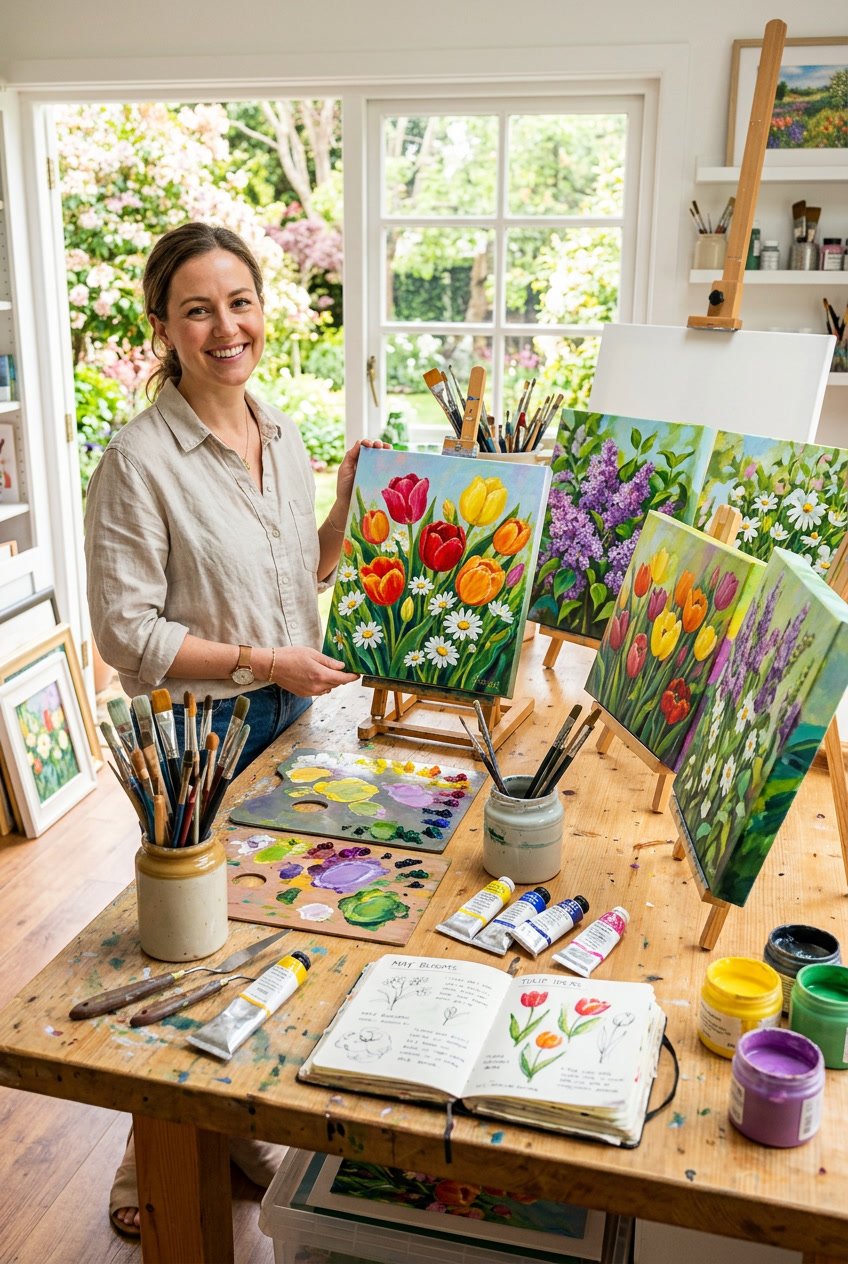
Show your May art where light, color, and people will notice it. Consider where folks gather, how the daylight shifts, and which pieces you want to stand out.

Spring Suncatchers Crafts Kit: package includes 36 pcs spring suncatchers in 9 designs, 36 paintbrushes, 36 suction hooks, 18 colored paints pots, 1 roll of fishing thread, and about 432 colorful acrylic beads; Use the paintbrush to add colors to the spring painting crafts, then hang them with the suction hooks in a sunny window to catch spring sunlight; Share them with your friends to have fun together

48 Vivid Colors Best Watercolor Paints Set -- The watercolour paint set including 42 unique vibrant colors, fine pigment powder make them soluble in water easily. The color is saturated and beautiful, the effect of halo dyeing is good, the texture is light and thin, with high transparency, and create a natural blooming in your painting paper. You can play your imagination and talent more freely, easy to blend to create an endless range of colors

Complete Spring & Mother's Day Craft Kit: this paintable flower pot craft kit includes 48 paintable plastic flower pots, 240 colorful twist rods (30 per color), 12 watercolor pens, 6 Scrapers, 4 sheets of rhinestone stickers, and 24 themed sticker sheets — everything needed for a fun DIY experience
Creating Seasonal Art Displays
Put floral or pastel art near windows with morning sun. That soft light brings out gentle greens and pinks.
Hang a single bold piece above a mantel or console. Then, group two or three smaller works beside it for balance.
Try a grid of three or four same-sized prints if you’re after a tidy, modern vibe. Leave 2–3 inches between frames, and hang the center at eye level, about 57–60 inches from the floor.
Add seasonal props with a light touch—a small vase of fresh flowers, a woven runner, or a wooden frame that feels like spring. Swap out a piece or two every few weeks to keep things fresh.
Making Art for Gifting and Celebrations
Pick sizes that are easy to frame and mail, like 5×7 or 8×10 prints. Slip on a simple mat and a lightweight frame so it’s ready to hang.
For celebrations like Mother’s Day, graduations, or spring birthdays, paint themed small canvases or make sets of matching cards. A handwritten note about the art or your process makes the gift feel personal.
When you package art, wrap flat prints in clean tissue paper and tuck them into a rigid mailer. For local gifts, set the piece on a small easel or in a reusable cloth bag.
Frequently Asked Questions
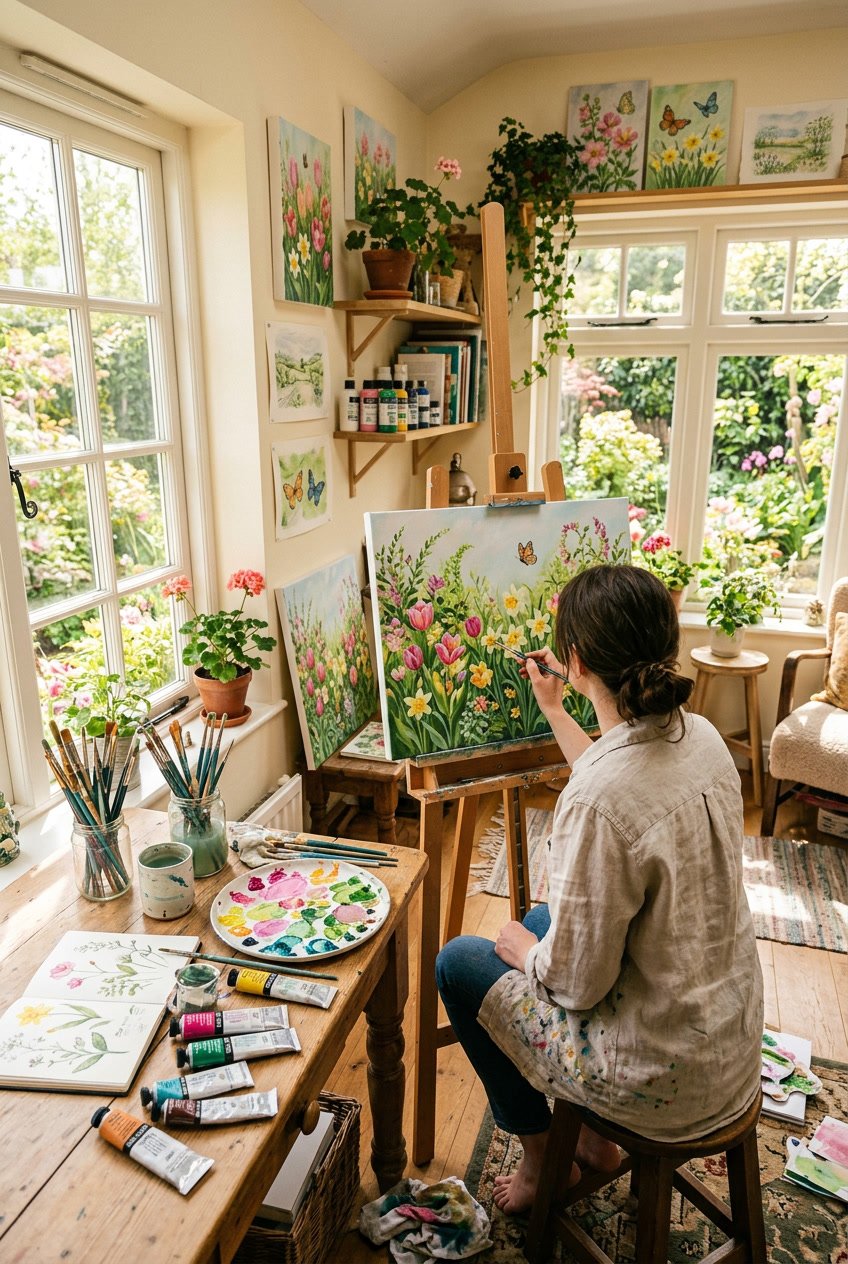
Here are practical answers about themes, colors, sizes, techniques, floral ideas, and how to capture that shift from spring to summer in May paintings.
You’ll find palettes, canvas suggestions, beginner steps, and ideas for painting flowers and seasonal change.
【What You Will Receive】You will receive 120 pieces of watercolor paper bulk, which is enough for your daily use and replacement, can meet your various painting needs, and can also be shared with your kids, friends and family.

Discover the perfect paper for your next watercolor masterpiece!

Tape top bound watercolor pad - 11-x-15-inches
What are some popular themes for paintings during the month of May?
May brings fresh growth and outdoor life. Picture flowering gardens, rain-wet streets, backyard picnics, and bees or butterflies on blooms.
You could also paint events like May Day wreaths, graduations, or early farmers’ markets. Scenes with morning light or late-afternoon golden hours feel just right.
Which color palettes best capture the essence of May?
Start with soft pastels—sage green, mint, pale lavender, blush pink, sky blue, and butter yellow. Add small pops of magenta, cobalt, or lime for energy.
Cool neutrals like warm gray or taupe keep things grounded. For rainy or evening scenes, bring in slate blue and olive to hold on to that spring vibe.
What are the best canvas sizes for creating seasonal May artwork?
Go for small canvases (8×10 or 9×12 inches) when you want to do studies or fast plein-air pieces. They’re perfect for catching light and color quickly.
Medium sizes (11×14 to 16×20 inches) work for detailed garden scenes or portraits. If you want a sweeping landscape or a big floral piece, grab a large canvas—20×24 inches and up.
Can you suggest any May-inspired painting techniques for beginners?
Try wet-on-wet watercolor washes to capture soft morning haze. It’s forgiving and quick for skies and backgrounds.
Use dry brushing or light stippling with acrylics to suggest grass and tiny blossoms. You get detail without fuss.
Start with simple layered glazes in oil or acrylic. Lay a base color, let it dry, then add thin translucent layers for depth. Work in small sections and keep values simple.
What are some creative ways to incorporate flowers into May-themed paintings?
Block in flower clusters as loose shapes first, then pick a few focal blooms to refine. That way, you avoid over-detailing and keep the composition balanced.
Botanical silhouettes against plain backgrounds feel modern. Or, collage pressed petals into your mixed-media piece for real texture.
Try painting flowers at different focus levels—a sharp bloom up front, with softer, blurred flowers behind. It adds depth and a breezy feeling.
How can I represent the transition from spring to summer in my May paintings?
Try showing longer daylight by shifting the light toward warmer, late-afternoon tones along one side of the canvas. Warm highlights on leaves and petals really help, too.
Add in early summer hints—fuller foliage, maybe some taller grasses, and those first dragonflies buzzing around. Let your spring pastels fade into richer greens and golds as the season heats up.