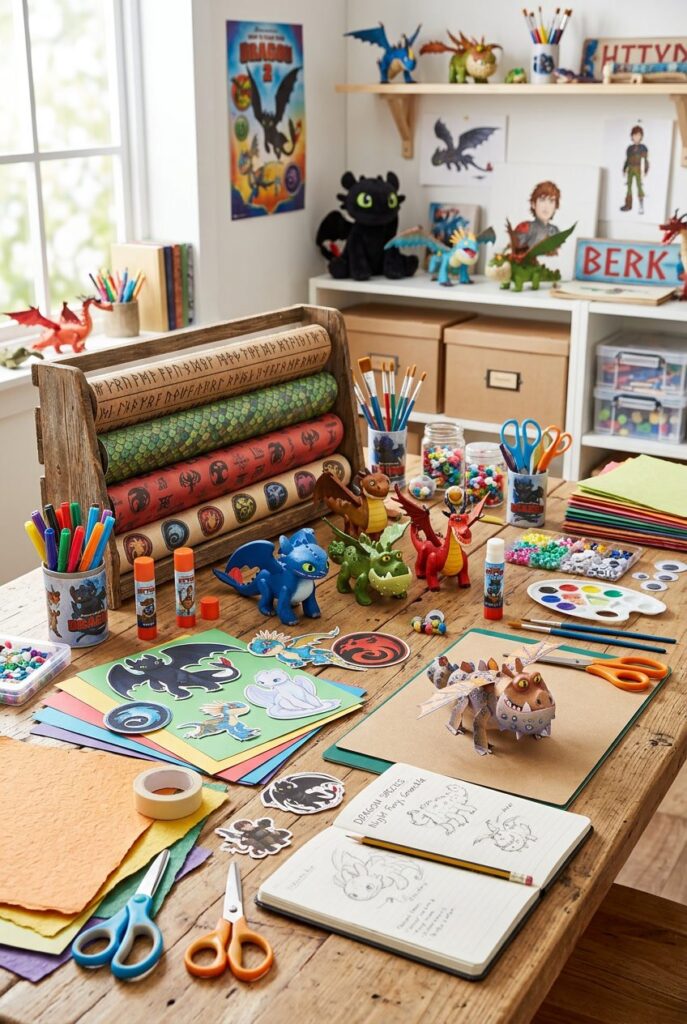
Dive into easy, fun How to Train Your Dragon crafts that you can make with simple supplies and a little time.
You’ll find projects for every skill level—from quick Toothless bookmarks and painted rocks to plushies, puppets, and costume pieces that spark pretend play.
Each craft comes with clear steps and printable ideas, so you can start right away and keep kids engaged with characters like Toothless and the Light Fury.
Looking for hands-on activities, party ideas, or gift projects? You’ll find a mix of quick wins and longer builds to match your mood and whatever you’ve got lying around.
Key Takeaways
- Find simple, low-prep projects you can make quickly with common craft supplies.
- Try character-focused crafts that encourage role play and display.
- Choose from printables to advanced themed projects for parties or gifts.
Essential Materials and Preparation
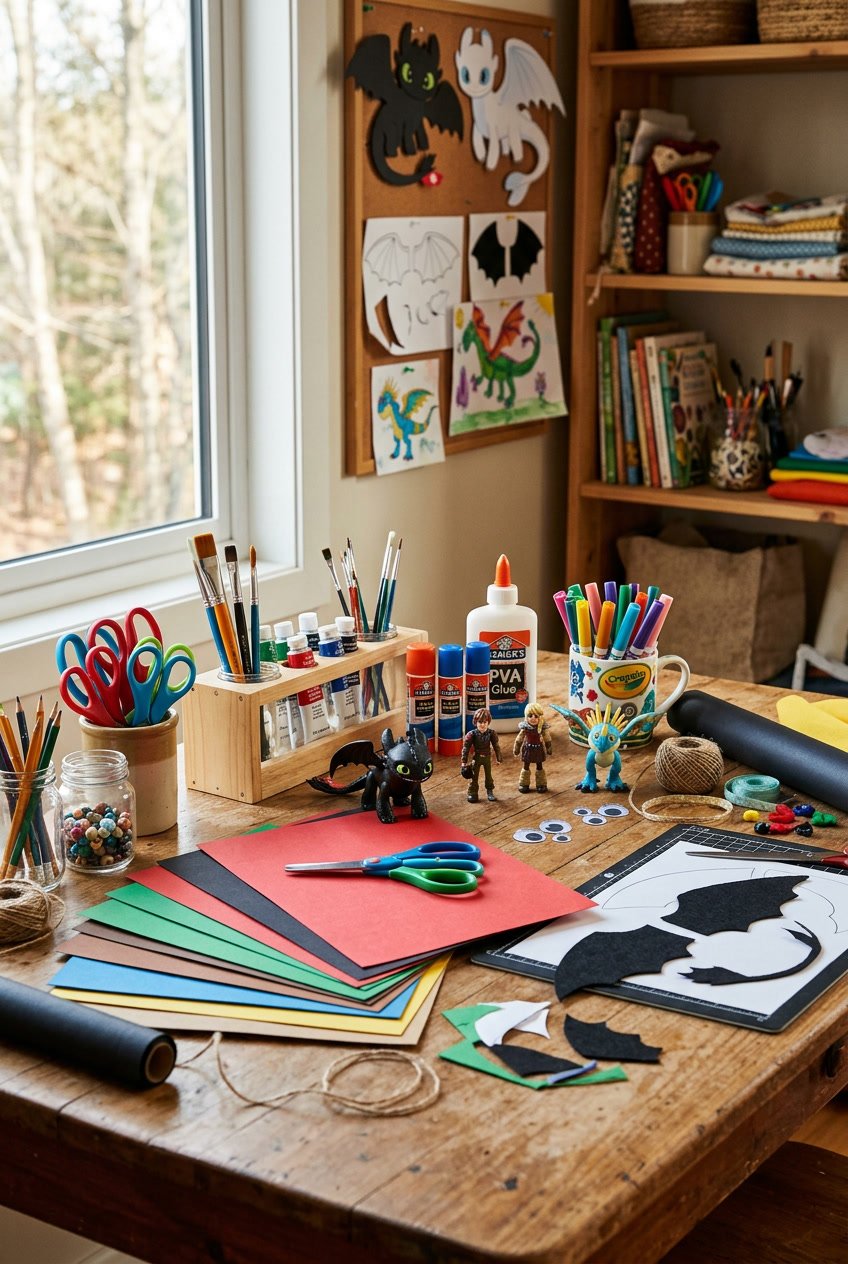
Grab the right tools, set up a safe workspace, and print any templates before you start.
This saves time, keeps kids focused, and helps projects look a whole lot neater.
Gathering Craft Supplies
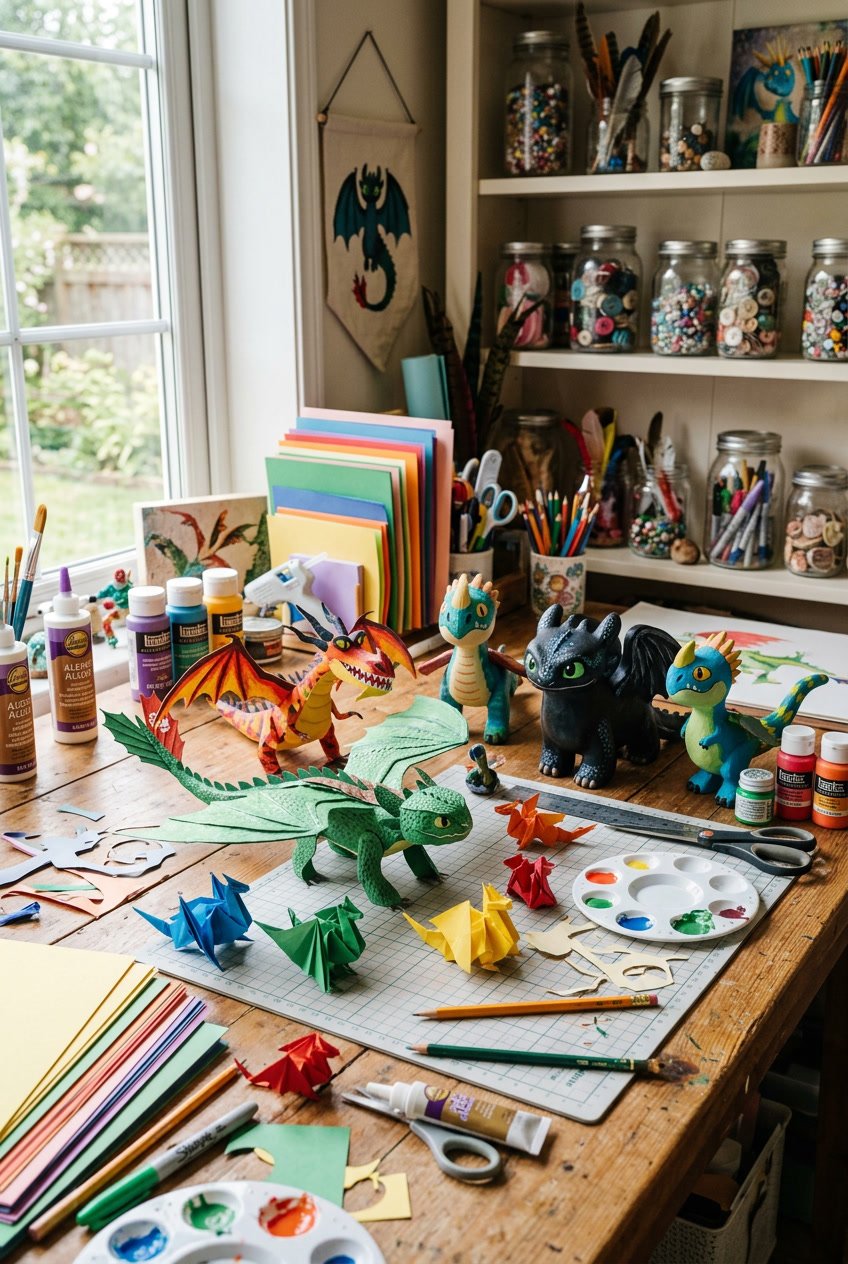
Here’s what you’ll want close by: construction paper (black, white, and bright colors), cardstock, glue sticks, white school glue, child-safe scissors, markers, acrylic paints, paintbrushes, and googly eyes.
Add pipe cleaners, pom-poms, felt scraps, and foam sheets for texture. For clay or polymer projects, you’ll need modeling tools and a small rolling pin.
Toss small items into containers or muffin tins to avoid losing pieces. Label bags for each craft (like “Toothless bookmark kit”) to make cleanup faster.
Keep a scrap box for leftover shapes you might use again. If you want to sew plushies, have a blunt needle and some basic thread colors ready.
Safety Tips for Kids’ Projects
Pick tools that fit your kid’s age. Use blunt-tip scissors for little ones, and keep craft knives for adults only.
Supervise glue guns and hot tools—low-temp glue guns are safer for kids. Watch out for small parts like beads or googly eyes with children under five.
Store anything toxic—solvent paints, strong adhesives—where kids can’t reach. Work on a wipeable surface or craft mat to protect your table and make cleanup less of a headache.
Remind kids not to taste paint or glue, to keep lids closed, and to wash hands after crafting. Keep a wet towel close for spills.
And yeah, no running with scissors or tools. That rule’s non-negotiable.
Using Free Printables Effectively
Choose high-resolution free printables so lines look crisp and colors print true. Check the file format before you download; PDFs keep the right scale, while JPGs can stretch.
If you need exact sizes (like for wings or masks), set your printer to 100%—skip “fit to page” unless you’re okay with a little guesswork.
Print on heavier paper or glue printables to cardstock for sturdier crafts. If a printable has multiple pages, staple or tape the edges before decorating.
Keep an extra set handy in case a sheet tears or gets too soggy with paint. If you resize a printable, try one copy first.
Use a window or light table to trace printables onto craft foam or felt when you need something tougher. And check licensing—most free printables are fine for personal use, but double-check if you’re thinking about selling finished crafts.
Toothless Craft Projects
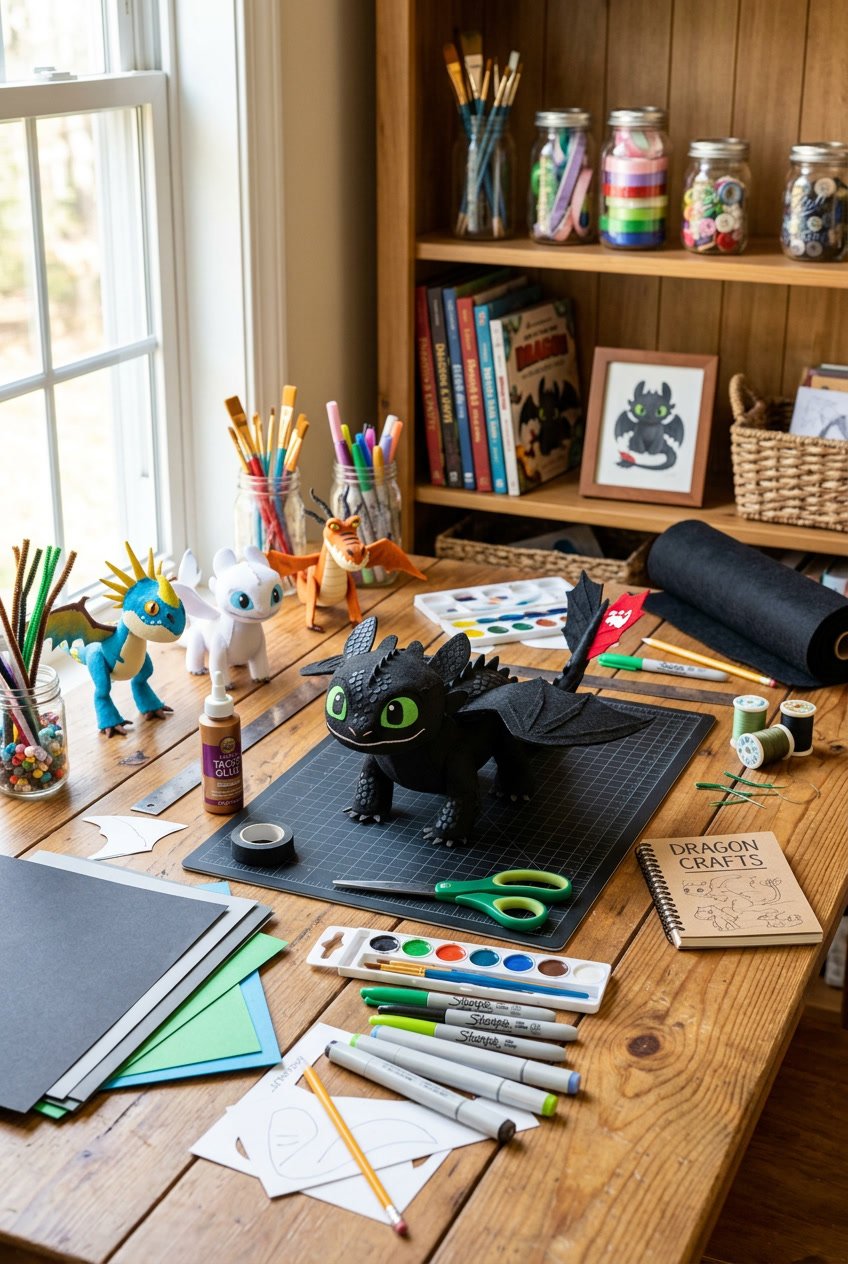
Let’s focus on Toothless from How to Train Your Dragon.
You’ll find paper patterns, a yarn amigurumi option, and simple cup decorations that are great for kids and parties.
Toothless Paper Craft
Use cardstock, scissors, glue, and a printable template to make a paper Toothless that stands or folds flat.
Print the face and body template, cut along the lines, and score folds with a blunt tool for crisp edges.
Black cardstock holds its shape best. Add white and green paper for eyes and tail details.
Tape or glue tabs to join pieces. For younger kids, pre-cut body shapes and let them glue on the face and wings.
Attach a craft stick to turn it into a puppet, or string it up as a hanging decoration. Paper crafts build cutting and gluing skills and give you a sturdy Toothless to display.
Toothless Amigurumi
If you crochet, try making a Toothless amigurumi for a soft, lasting dragon.
Use worsted weight black yarn, a 3.5–4 mm hook, safety eyes (10–12 mm), stuffing, and a yarn needle.
Start with a magic ring for the head, shape the snout and skull, then crochet a separate body and wings to sew together.
Keep rounds simple and count stitches as you go. Mark the start of each round with a stitch marker.
Sew eyes in before stuffing the head. Add little felt details for the eye highlights and tail fin.
Amigurumi builds fine motor skills and patience, so it’s best for older kids or adults crafting with kids nearby.
Toothless Cup Decorations
Turn plain paper cups into Toothless-themed party cups using black and white paper, glue, scissors, and markers.
Cut a black strip to wrap the cup, leaving space for a face panel. Glue on big white eyes and draw green pupils with marker.
Use small black triangles for ears and scalloped pieces for the tail fin. Prepping cup wraps ahead helps when crafting with kids.
Let kids decorate eyes and glue on pieces. These cups work as snack holders or table decor and hold up well if you use cardstock and tape.
They’re a quick, kid-friendly way to bring How to Train Your Dragon to a party.
Dragon Crafts Featuring Light Fury and More
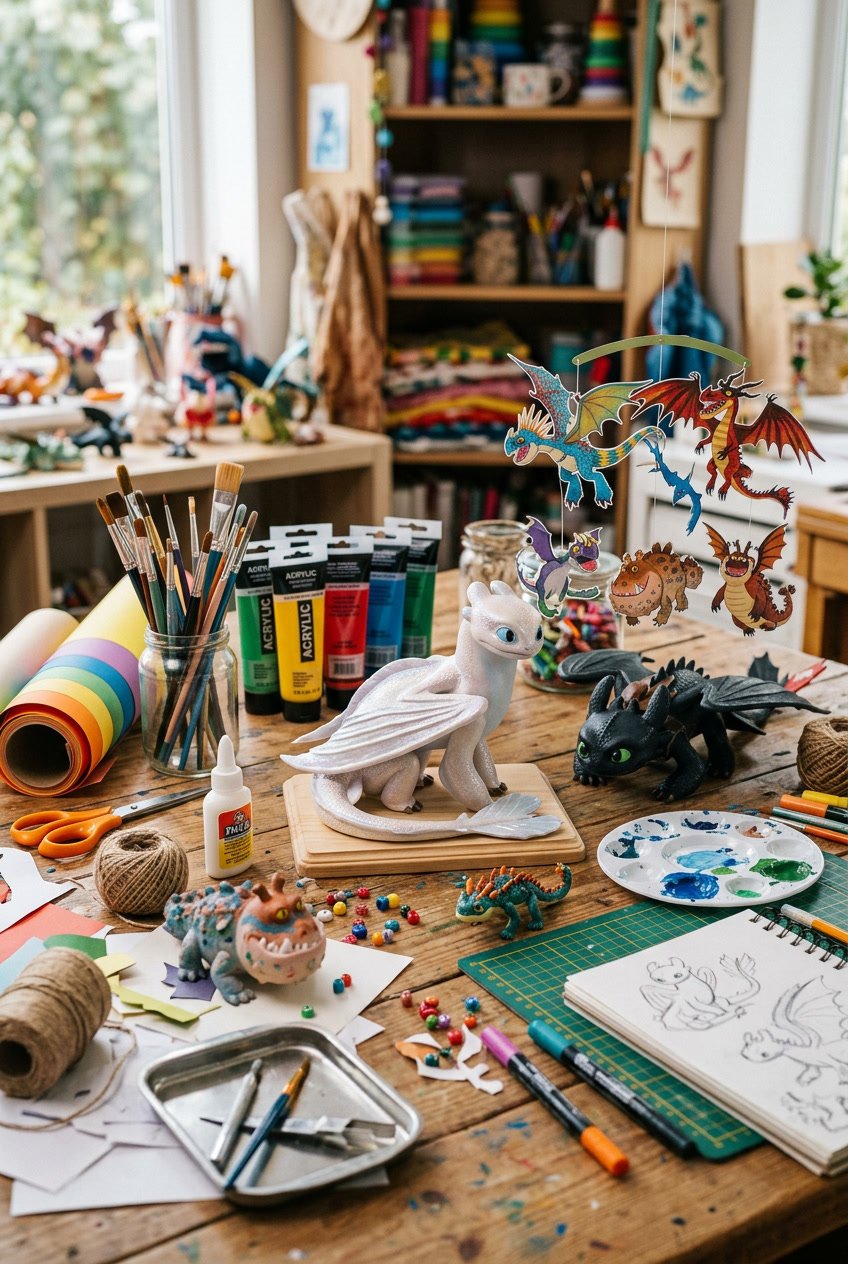
These projects are small, hands-on builds you can finish with basic craft supplies.
You’ll make finger puppets, simple models of favorite Berk dragons, and soft, colorful dragons using felt and pipe cleaners.
Light Fury Finger Puppets
Make a Light Fury finger puppet from white cardstock or a printable template.
Cut a 2.5–3 inch tall body shape, leaving a slit at the bottom for your finger. Add folded blue eye pieces and small black pupils; glue them near the top for a clear face.
For the mouth, attach a pink semicircle and glue tiny white teeth cut from folded paper. Use glitter paper or a white marker for a little sparkle.
Finish with small wings glued to the back and a tail strip. You can make a matching Toothless puppet for storytelling.
Materials list:
- White cardstock or printable template
- Blue, pink, black paper or markers
- Glue, scissors
- Optional: white glitter paper
Stormfly, Barf and Belch, and Hookfang Models
Build standing models of Stormfly, Barf and Belch, and Hookfang using cardstock or lightweight cardboard.
Sketch each dragon’s main silhouette: slender and winged for Stormfly; twin-headed for Barf and Belch; bulky and spiky for Hookfang.
Cut and score folds so each model stands or can be glued to a base.
Add details with layered paper—scales, horns, and teeth. For Barf and Belch, make two heads on one neck strip.
Use bright markers and patterned paper to match each dragon’s colors. Reinforce fragile points with tabs and clear tape on the back.
Tools and tips:
- Cardstock, pencil, scissors, craft glue
- Scoring tool or blunt knife for folds
- Reference images from Dragons of Berk
Colorful Felt and Pipe Cleaner Dragons
Craft plush-feel dragons by combining felt bodies with pipe cleaner skeletons.
Cut a felt body pattern—head, torso, tail—and sandwich a shaped pipe cleaner inside before sewing or gluing the seam.
Bend the pipe cleaner to pose wings, legs, or tails so your dragon can perch or curl.
Decorate with felt scale layers, glued or stitched on. Use small beads for eyes or embroider pupils for safety.
Mix colors inspired by Light Fury (white and pearly blue) or Berk dragons (greens, reds, stripes).
These dragons make soft toys and bookmarks and hold up well in small hands.
Quick supply list:
- Felt sheets, assorted colors
- Pipe cleaners, embroidery floss, glue
- Beads or small safety eyes (optional)
Coloring Pages and Creative Printables
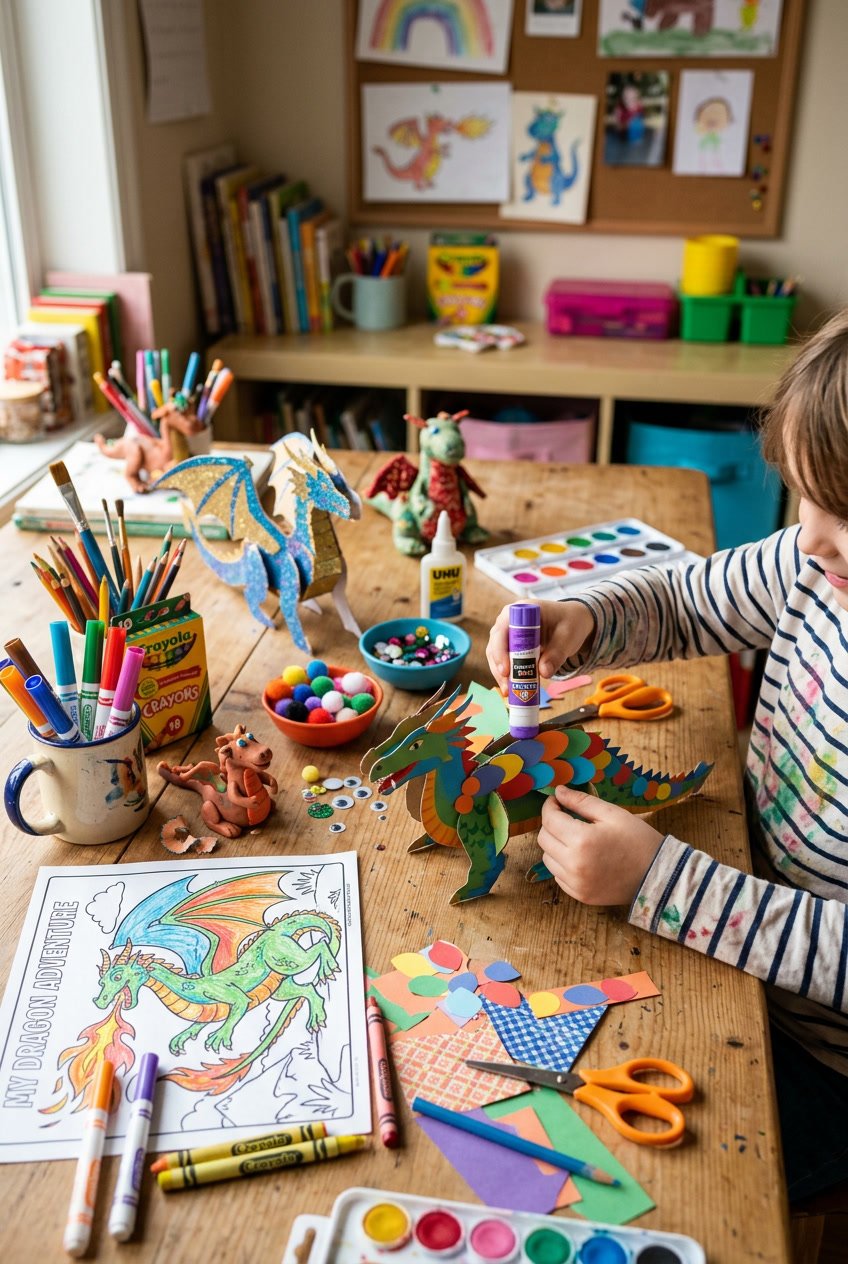
You’ll find ready-to-print dragon coloring pages, themed activity sheets, and color-by-number templates for parties, classrooms, or quiet afternoons.
Pick pages by character, scene, or difficulty so everyone gets a good fit.
How to Train Your Dragon Coloring Pages
Choose coloring pages that match your group’s age and skill.
Simple Toothless or baby dragon sheets are great for little kids. Detailed flight scenes or Hiccup portraits give older kids and teens a chance to practice shading and blending.
Look for sets with multiple characters—Toothless, Light Fury, Hiccup, Astrid—so you can run themed activities.
Print on US letter or A4 paper. Use crayons for simple fills, colored pencils for fine lines, and markers for bold color.
Print extra copies so kids can try out different color schemes.
Crafting with Free Printable Designs
Free printables make it easy to turn coloring pages into crafts.
Print on heavier paper for bookmarks, cut-outs, or puppets. Laminate finished pages for placemats or wall art.
Try these steps: 1) Print your page on cardstock. 2) Color and add glitter or stickers. 3) Cut out the shape and attach a craft stick for a puppet or a magnet strip for fridge art.
For classroom banners, print several pages, punch holes at the top, and string them on yarn.
These steps keep setup fast and results tidy.
Color by Number Activities
Color by number pages add structure and help kids learn color and number matching.
Pick easy (2–4 colors), medium (5–8 colors), or advanced (with shading) sheets depending on your group.
Give a clear color key at the top: number → color. Use washable markers for younger kids and fine-tip pencils for details.
Turn these into group games by assigning each child a number set, then combine sections for a big mural.
Color by number sheets work nicely as quick classroom warm-ups or calm-down activities after play.
Role Play and Dress-Up Crafts
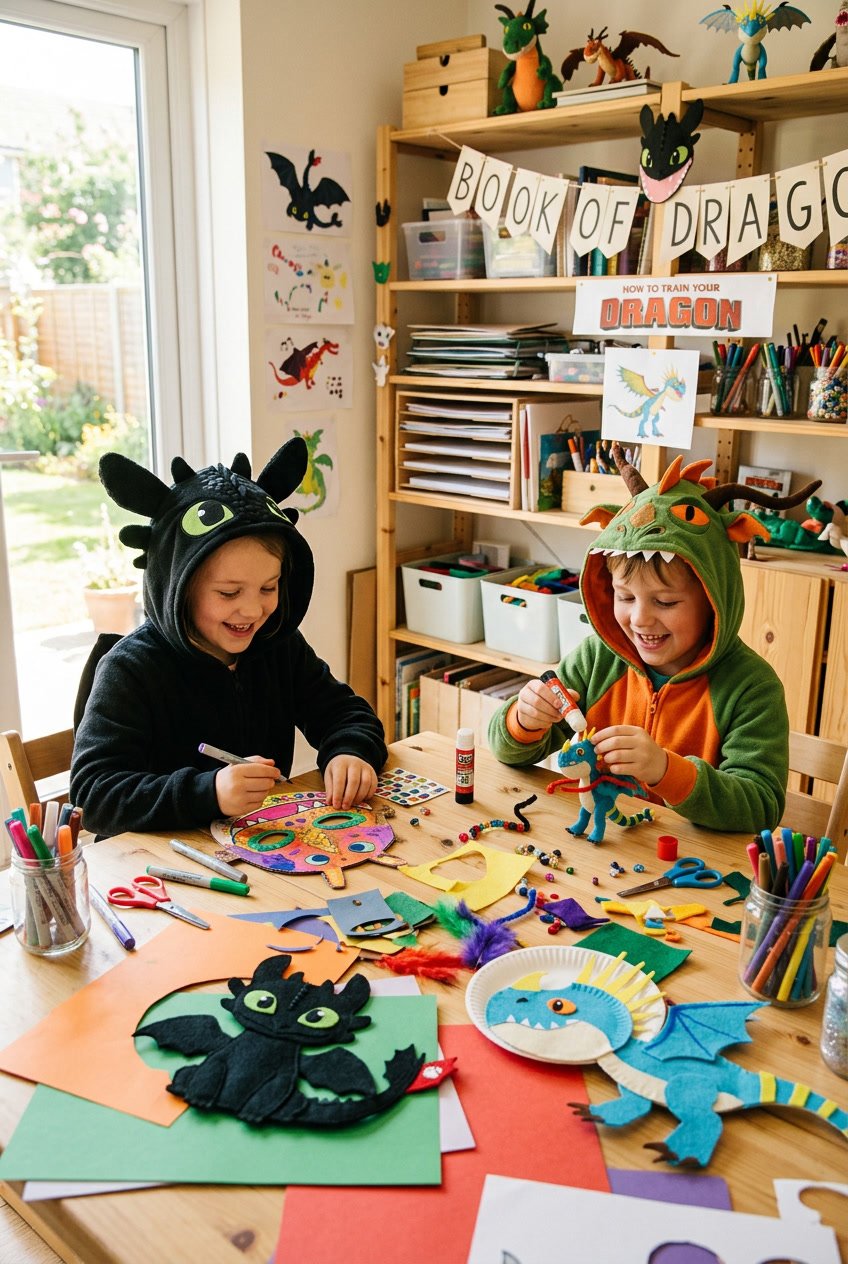
These projects turn playtime into scenes from Berk.
You’ll make wearable pieces that hold up to rough play, fit kids of different sizes, and match characters like Hiccup, Astrid, and Fishlegs.
Viking Helmets
Start with a sturdy base: grab a cereal box or thin corrugated cardboard and cut it to fit your child’s head.
Measure around the forehead and add a couple inches for overlap; secure with hot glue or strong tape.
Add a center strip from front to back to strengthen the helmet and keep it from folding.
Paint the helmet with matte acrylics. Hiccup’s helmet is simple and leather-toned; Astrid’s can have braids or ribbon.
Attach foam or cardboard horns that slope back—glue them inside and reinforce with tape. Line the inside with felt for comfort.
To age the helmet, dab darker paint in the creases for a worn look.
Safety tip: skip sharp edges and heavy decorations. Keep the helmet light so kids can run and play Dragon Rider without a headache.
Dragon Masks
Pick a mask base—paper mâché, craft foam, or a blank plastic mask.
For Toothless, focus on big eyes and rounded ears; for other dragons, highlight horns or frills.
Trace your kid’s face and cut eye holes for visibility and airflow.
Add texture with layered foam scales or glued tissue paper. Use elastic bands or fabric ties for a good fit.
Paint with acrylics: black with blue highlights for Night Fury, or bright patterns for other dragons.
Glue felt along the nose and forehead so the mask sits comfortably.
Want movement? Hinge small foam jaws with brads so the mouth opens when your kid talks.
Keep all pieces secure and avoid loose parts. If you’re making several masks, label each one with the child’s name for easy sorting.
Homemade Shields
Cut a shield shape from cardboard or thin plywood. If you want it to last longer, plywood’s the way to go.
For cardboard, glue two layers together. Reinforce the edges with duct tape.
Trace an oval or kite shape about 18–22 inches tall for kids. Add a handle on the back—foam or wrapped duct tape both work.
Paint shields with bold symbols: Hiccup’s can be simple and utilitarian. Astrid’s could look more ornate, and Fishlegs’ might show off animal motifs.
Seal the paint with a clear craft varnish. That’ll help it resist scuffs.
Attach straps: one vertical handle, one forearm strap. This keeps the shield stable while kids play.
Use rivet-style stickers or just paint some dots to mimic metal studs. It’s a quick trick that looks pretty convincing.
Balance weight and durability. Lightweight shields let kids swing and block without getting hurt.
If you’re planning group battles, add a soft foam rim. That way, impacts stay harmless.
Advanced and Themed Projects
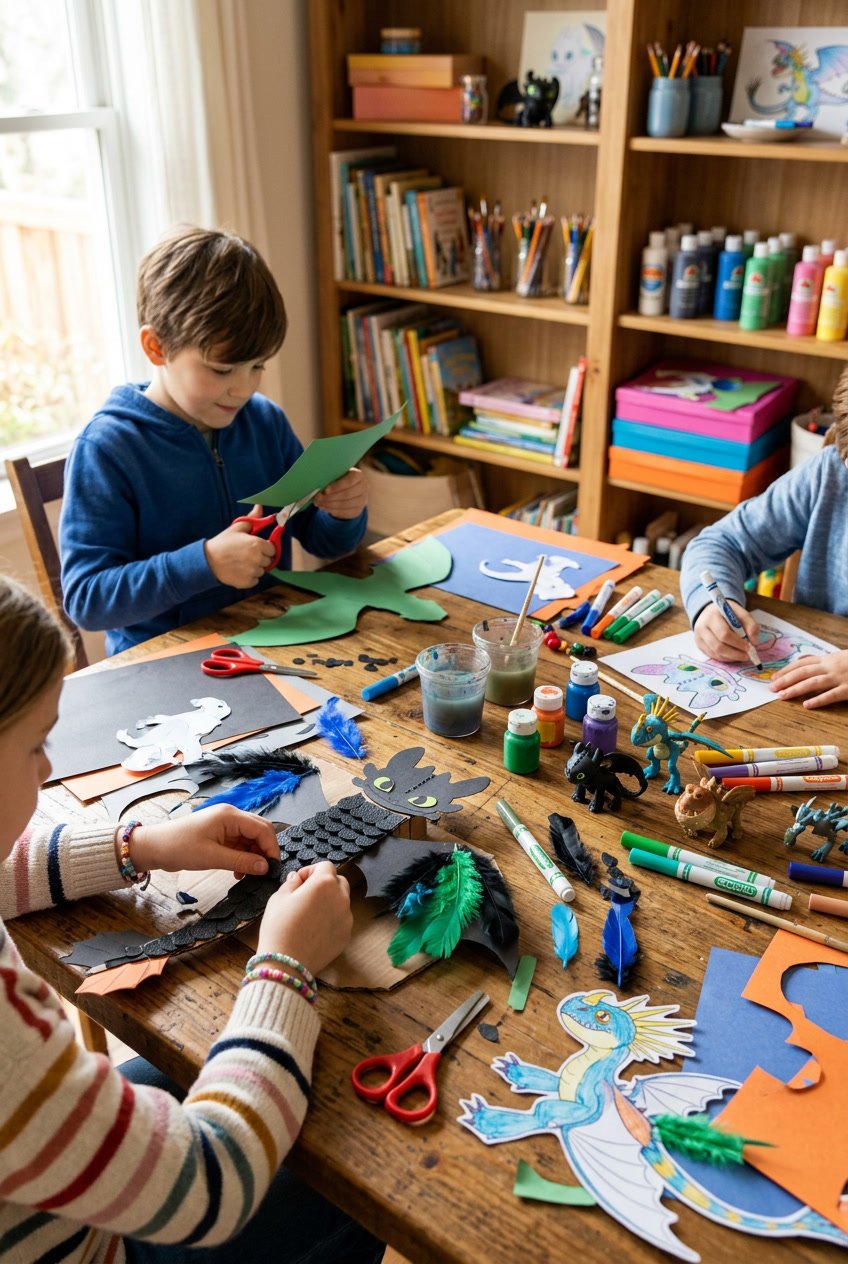
These projects add skill-building or story-driven play to basic dragon crafts. You’ll get to try out simple physics, construction tricks, and focus on character accuracy.
DIY Catapults for STEM Learning
Build small catapults from popsicle sticks, rubber bands, and a plastic spoon. You’ll explore force and angles as you go.
Glue or clamp five sticks together for the base. Stack three for the throwing arm.
Use a rubber band as the pivot. The spoon works as the cup.
Test with cotton balls, pom-poms, or small foam “boulders.” It keeps things Toothless-scale and safe.
Measure launch distance. Change just one thing at a time: arm length, tension, or projectile weight.
Record results on a simple chart. Ask your kid to guess what’ll happen before each test—it’s a great way to sneak in some hypothesis skills.
Safety first, always. Only launch soft, light objects.
Supervise younger kids with glue guns or scissors. Turn it into a mini STEAM lesson by connecting catapult mechanics to Viking siege tools from How to Train Your Dragon.
LEGO and Building Block Dragons
Design a stable dragon frame using a sturdy spine, hinged wings, and a tail counterweight. Start with a 6–8-stud-long base for the spine.
Use hinge or ball-joint pieces for wing articulation. That way, wings can flap or fold.
Add small plates and tiles for a scale-like texture. For Toothless, focus on a rounded head and tail fin.
If you’re making your own dragons, try dual heads or extra limbs. Why not get weird with it?
Include movable features: jaws that open, a removable saddle for Hiccup minifigures, and a storage compartment for tiny accessories.
Use contrasting colors for eyes and wing membranes. If parts run low, mix bricks with craft foam or pipe cleaners for flexible tails and fins.
Share building steps in numbered photos or a quick list. Kids can follow along or remix as they like.
Encourage redesigns: stretch the wingspan, swap studs for smooth plates, or add LED bricks for glowing eyes.
Incorporating Movie Characters
Match characters to craft scale and personality. For Toothless, make a puppet with black felt, button eyes, and a small Velcro-backed prosthetic tail fin.
Create an Astrid helmet from painted cardstock and yarn braids. It’s a fun way to capture her look.
Use printed character name tags and props—Hiccup’s journal, a shield, or even a frog prince costume twist. It helps link crafts to favorite scenes.
If you’re adapting the frog prince idea, turn a small plush frog into a Viking prop with a felt crown and tiny cloak. It’s a playful cross-theme prop for stories or puppet shows.
Keep proportions consistent so characters look right next to dragons. Label each piece with the character name and a quick trait (brave, curious, clever) to spark role-play.
Frequently Asked Questions
These answers give you clear, usable steps and lists. You’ll find quick party craft ideas, kite-building tips, costume materials, puppet steps, easy kid projects, and a scavenger-hunt plan.
What are some creative craft ideas for a dragon-themed birthday party?
Make a Toothless paper plate mask with black paint, cardstock ears, googly eyes, and elastic string. It’s a cute wearable favor.
Create a dragon tail sequin banner from felt, glued sequins, and twine to hang behind the cake table.
Set up a painted-rock station where kids decorate smooth stones as dragons. Use acrylic paint and clear spray sealer.
Offer a build-your-own dragon station with pipe cleaners, pom-poms, felt scraps, and glue. Each child gets to make a small toy dragon to take home.
How can I create a dragon kite that actually flies?
Use lightweight ripstop nylon or a big garbage bag for the sail. Reinforce it with thin bamboo dowels or fiberglass rods in a diamond frame.
Attach a long tail made of ribbon strips or fabric to keep it stable. Tie a bridle of two equal-length strings from the top and bottom of the kite to a single flying line point.
Test and adjust the bridle angle and tail length on a breezy day. If the kite dives, shorten the bridle or add more tail; if it stalls, lengthen the bridle or take off some tail.
What materials are needed for making a dragon costume at home?
Grab felt or fleece for the body and tail. Use elastic or a stretchy hoodie as the base.
You’ll want hot glue or fabric glue, and a sewing kit for basic seams. For details, use craft foam or cardboard for wings and spikes.
Add paint or fabric markers for scale patterns, and Velcro strips for easy wing attachment. Safety scissors, strong thread, a ruler, and maybe some LED lights for eyes round out the list.
Can you provide steps to make a simple dragon puppet for kids?
Cut two identical dragon head shapes from felt or cardstock. Glue or sew them together, leaving a bottom opening for your hand.
Add a mouth with a strip of contrasting felt glued inside. Stick on felt eyes, teeth, and spikes along the head seam.
Slip your hand into the opening and move your fingers to open and close the mouth. If you want, mount the puppet on a stick for rod control.
What are some easy dragon-themed craft projects for young children?
Toothless bookmarks: cut cardstock into strips, paint a black face, draw eyes and nose, then laminate or cover with clear contact paper.
Paper roll dragons: use toilet-paper tubes, glue on paper wings, draw scales with markers, and add crepe-paper tails.
Pom-pom dragons: glue pom-poms in a row for the body, then add googly eyes and pipe-cleaner legs.
You probably have most of these supplies at home. Each project takes under 20 minutes.
How to design a dragon-themed scavenger hunt for a school event?
Spread out 6–10 clue stations around your space. Stick a dragon emblem card at each spot.
Make each clue send kids to the next location. Add a small challenge—maybe “name three dragon colors” or “build a three-piece dragon from blocks.”
Try picture clues for the younger kids. For older ones, rhyme clues usually work better.
Wrap things up at a “dragon lair” prize table. Here, kids can swap a found token for stickers or a little craft kit.