
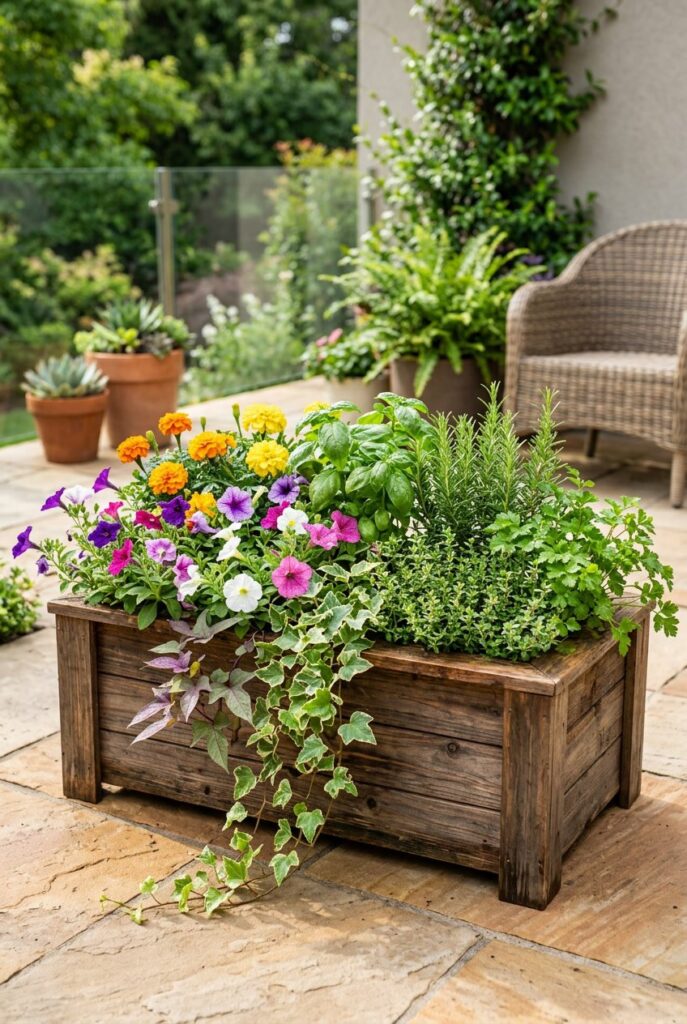
All your hard work planting your beautiful planter box will be lost if your plants don’t fit in their new home. So be sure to choose plants that will thrive in the light, space and condition of the planter box. Make sure to include a mix of tall, medium height and trailing varieties to maintain a good balance.
Choose at least three plants for your planter including one flowering, one greenery and one spiller plant. For your sunny planters, choose some sun loving herbs and vegetables and in the shadier planters, try using ferns and impatiens. If you still want lots of colour in your annual planters, try using larger flowering annuals such as petunias and geraniums.
Consider the texture and scent of plants in addition to their color. Soft foliage can help to calm down vibrant flowers, and herbs are not only fragrant but also good to eat.
Choose a good potting mix, and make sure your pot drains! For easy care, plant a mix of plants with similar watering needs.
Key Takeaways
- Match plant choices to your planter’s light and space.
- Combine flowering, foliage, and trailing plants for a balanced look.
- Use proper soil and drainage and group plants by water needs.
Choosing the Right Planter Box
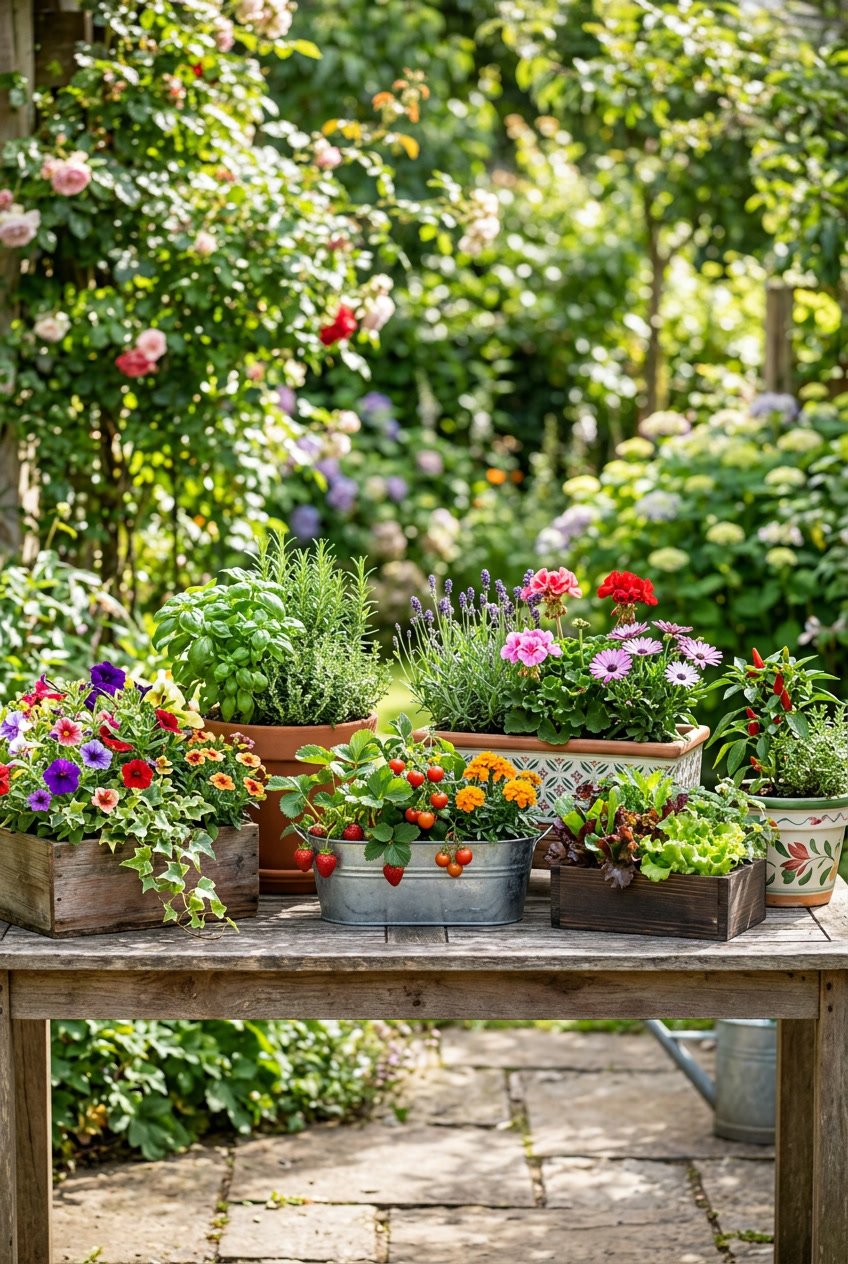
Choose a planter that will fit in the area you have available, accommodate the root structure of the plant you want to put in it, and fit with your level of care for that plant. Planters made from different materials and in a variety of sizes and drainage systems will differ significantly in terms of lifespan and the success or failure of the plants.
Materials and Durability
Use cedar or redwood for a wood planter that is truly natural and rot resistant. Wood is a lighter material than stone and concrete so it is more easy to use with window boxes and raised beds.
Planters for indoor seed starting Inside planters may be lined with a piece of landscape fabric to slow down moisture damage. In general, concrete and stone planters will provide the longest life and will also provide the benefits of warmth to the herbs and seedlings, which usually include warm loving plants such as basil, peppers and etc.
Too heavy for hanging on a balcony or from a railing, planters go best on a patio or a permanent spot in the garden. Wicker and metal are stylish materials for planters, but be sure to check the frame and any coatings that may contain lead.
Wicker needs a liner so that the soil doesn’t sit directly on the wood. Metal can get very hot and dry out soil so a lining to the metal or painting the metal a light color can help.
Modular Planter Boxes & Railing Planters Many people with decks would like to add more plants to their outdoor living space. Modular Planter Boxes & Railing Planters allow you to add additional planters on your deck. You will be happy to hear that many of our planters are self-watering planters so you will have to do less watering.
Choose an appropriate material for your planter by considering how often the planter will be moved, the climate where it will be located, and if it will be sitting on a tabletop or on the ground.
Size and Shape Considerations
Match planter depth to root depth. Herbs and lettuce do fine in 6–8 inch window boxes.
Cherry tomatoes and bigger veggies need 12–18 inches or more, like in deep modular boxes or raised beds. Width matters for spacing.
A 12–16 inch wide box fits several herbs. A 24+ inch box gives you room to mix tall and trailing plants.
Long, narrow railing planters work for linear displays but limit root space. Consider shape for sunlight and access.
Round or square planters work well on patios. Shallow troughs fit under windows.
Tall, narrow pots take less floor space but hold less soil and dry out faster. Balance plant size, root needs, and where you want to put the box.
Drainage and Placement
Make sure every planter has drainage holes. If roots sit in water, they’ll rot.
For concrete or stone, check that drilling holes won’t crack the planter; use a rubber gasket if you need to. Only use gravel if the bottom holes are clear—gravel won’t fix bad drainage.
Use a well-draining potting mix. Add perlite or coarse sand for veggies and herbs.
Place railing planters and window boxes where they get the right sun hours for your plants. South-facing balconies work for sun-loving herbs and tomatoes.
Shaded porches are better for ferns and leafy greens. For self-watering boxes, keep them close to a water source for easy refills.
If you move plants with the seasons, pick lighter materials or modular systems you can rearrange.
Design Principles for Stunning Planter Boxes
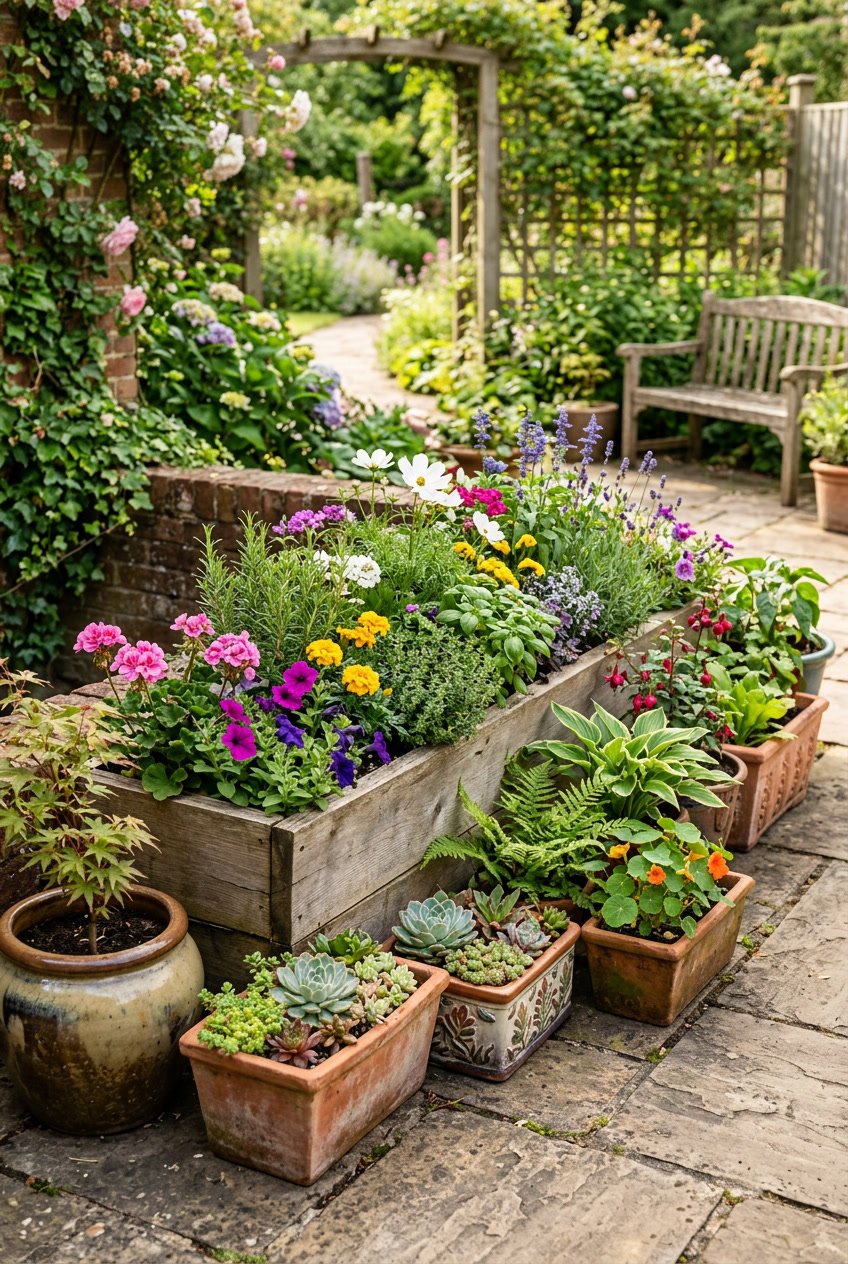
Good planter box design focuses on plant roles, balanced color, texture, height, and smooth seasonal changes. Don’t overthink it, but a little planning goes a long way.
The Thriller, Filler, Spiller Formula
Use three clear roles: a bold focal plant (thriller), mid-height plants (fillers), and trailing plants (spillers). Pick one thriller per container—maybe a tall grass, a dwarf conifer, or a dramatic perennial.
Fillers go around the thriller. Try compact herbs, annuals, or small shrubs like lavender, salvia, or marigolds.
They add volume and repeat color across containers for a cohesive look. Spillers soften edges and hide rims.
Go for trailing ivy, sweet potato vine, or lobelia. Aim for spillers to cascade 6–12 inches over the edge so your box feels unified.
Color, Texture, and Height Balance
Start with a 2–3 color palette for each planter. Use one dominant color, one accent, and a neutral green.
Repeat colors across a few containers for a linked look. Mix leaf textures: glossy coleus, fine ornamental grass, broad hosta.
Texture creates depth even when the flowers fade. Play with heights—tall thriller, medium fillers, and low spillers.
That keeps things interesting at eye level and from below. Think about container scale.
Use deeper, wider boxes for rooty veggies and tall thrillers. Shallow window boxes work for low-growing herbs and spilling annuals.
Match plant size to pot volume to cut down on watering headaches.
Seasonal Transitions
Plan for four-season interest if you want year-round containers. In spring, plant bulbs and cool-season annuals like pansies.
Swap to summer bedding plants such as petunias and basil when nights warm up. For fall, add resilient plants—ornamental grasses, mums, or small evergreens.
These hold form and color as the light fades. In winter, protect roots with mulch and move sensitive boxes to frost-free spots or indoors.
Use modular containers for easy swaps. Keep a stash of seasonal fillers and spillers so you can refresh a planter in under an hour.
Best Flowering Plants for Planter Boxes
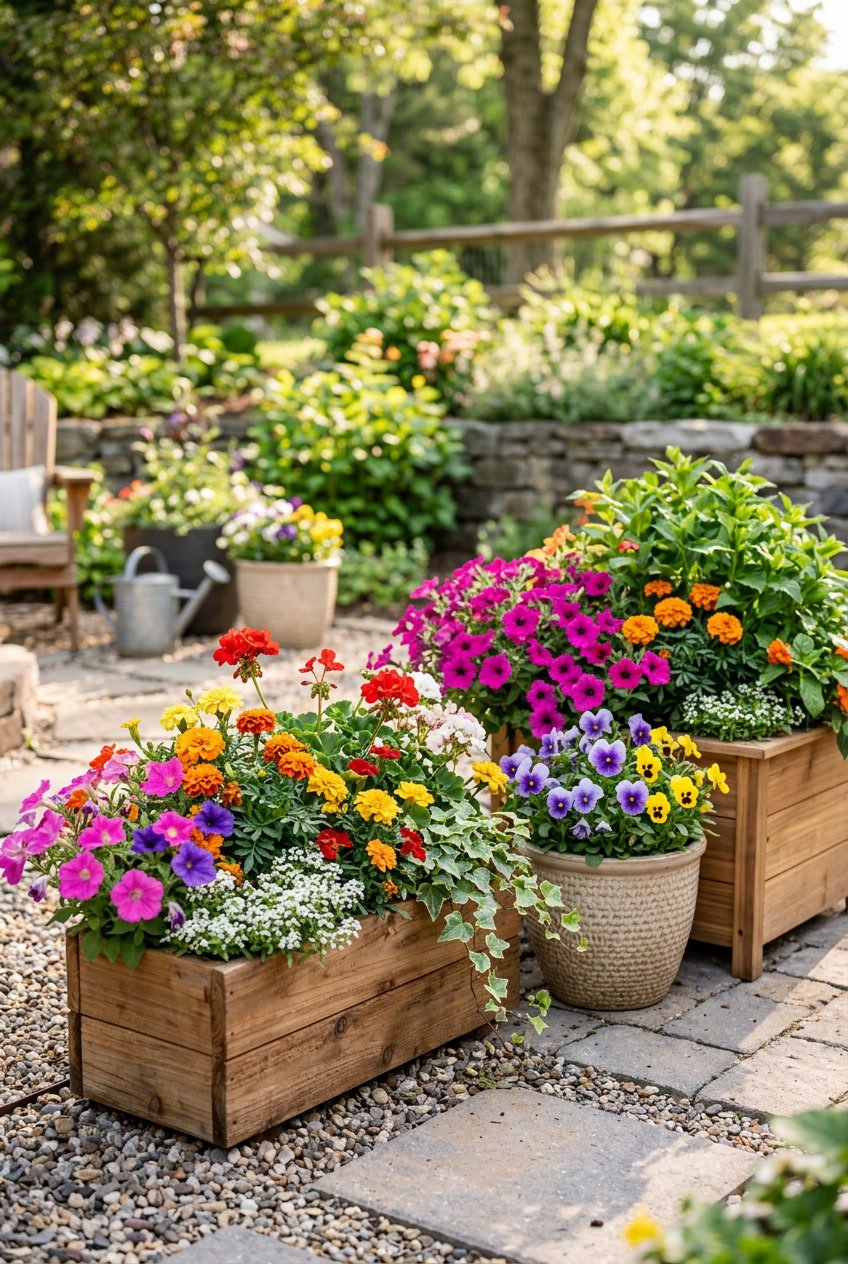
Choose plants that match the light where your planter sits. Pick a mix of trailers and upright growers, and group by watering needs so you don’t drown one while another wilts.
Sun-Loving Annuals
Go for petunias and calibrachoa (Million Bells) for nonstop color in full sun. Petunias handle heat and give big, showy blooms.
Calibrachoa spills and fills the edges with tons of little flowers. Add lantana and melampodium for heat tolerance and long bloom time.
Both handle dry spells better than most annuals. Use a mix of upright and trailing types for depth and a full look.
Fertilize every couple of weeks with a balanced water-soluble feed to keep blooms coming. Use well-draining potting mix and place planters where they get at least six hours of sun.
Shade-Loving Blooms
For shady spots, try impatiens, New Guinea impatiens, and tuberous begonias. Regular impatiens do great in deep shade and stay compact.
New Guinea impatiens handle brighter, dappled light and give bigger leaves and bolder flowers. Tuberous begonias thrive on cool, shaded porches and offer big blooms if you keep them evenly moist.
Lobelia and pansies/violas also work well in cooler, partly shaded boxes. Lobelia trails blue or purple flowers over the edge.
Pansies and violas tolerate light shade and give crisp color in spring and fall. Use a peat- or coir-based mix that holds moisture but still drains, and water when the top inch of soil feels dry.
Perennials for Lasting Beauty
Pick perennials like dianthus and some begonias for multi-season interest without replanting every year. Dianthus brings fragrant, low mounds of pink, red, or white blooms and likes full sun with good drainage.
Wax begonias and hardy geraniums (ivy geraniums if you’re somewhere warm) give textured foliage and repeated flowers. Mix perennials with summer annuals to fill gaps as perennials get established.
Use deeper boxes—8–12 inches or more—for perennials to let roots grow. Mulch lightly and feed perennials less often than annuals; a slow-release fertilizer at planting time usually does the trick.
Foliage and Trailing Plant Selections
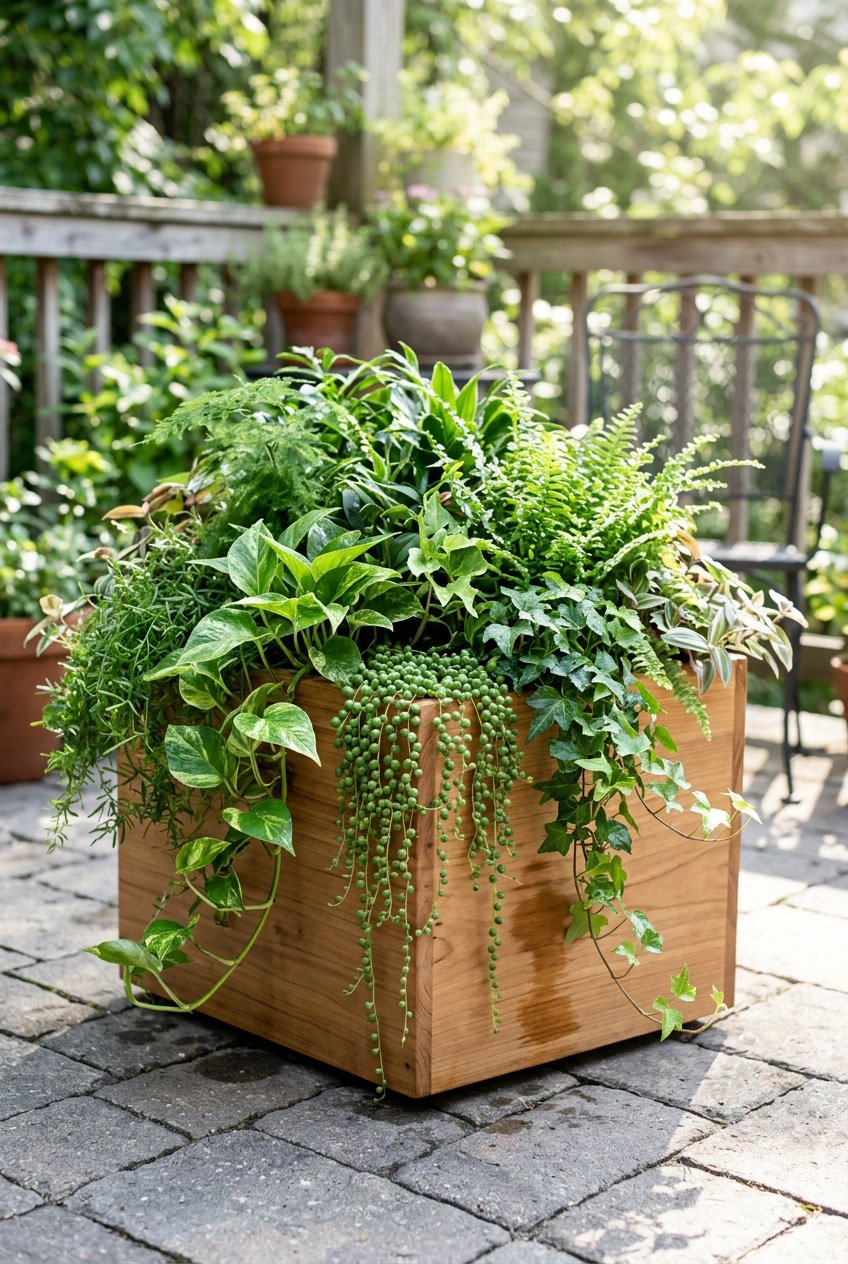
Pick plants that give color, texture, and movement. Choose one bold foliage plant, one trailing spiller, and one textural element like an ornamental grass or fern for a balanced box.
Colorful Foliage Showstoppers
Go for plants with strong leaf color to anchor your box. Coleus and Persian shield bring dramatic reds, purples, and metallic greens that stand out.
Heuchera and caladiums add different leaf shapes and tones—heuchera likes part shade, caladiums need warm, humid spots. Dusty miller gives silvery contrast and holds up in sun.
Stick to one showstopper per box and surround it with smaller green or silver-leaf companions to avoid a crowded look. Pay attention to light and water needs.
Many colorful foliage plants dislike harsh afternoon sun. Place coleus and caladium where they get morning light.
Group plants with similar watering needs so heuchera isn’t next to thirsty caladiums.
Trailing and Vining Plant Ideas
Add spillers along the box edge to soften lines. Sweet potato vine and potato vine give fast, bold cascades in bright sun.
Creeping Jenny and dichondra create low, dense mats that spill nicely and can handle a little foot traffic. For hanging, string of pearls and pothos give a delicate drape indoors or on shaded porches.
English ivy and potato vine suit cooler or shadier spots but can get out of hand—keep them trimmed. Mix textures: pair glossy pothos with airy asparagus fern or lacy Boston fern.
Lamium and licorice plant fill gaps with patterned or fragrant foliage. Always match trailing plants to your box depth so roots have enough space.
Ornamental Grasses and Texture
Use grasses and grass-like plants for height and movement. Purple fountain grass and small ornamental grasses add vertical lift and rustle in the wind.
Sedge grass and carex thrive in shady, moist boxes and bring narrow, architectural leaves. Cordyline stands tall and pairs well with trailing vines.
Ferns like Boston fern and asparagus fern soften edges and add feathery texture in shade. Combine one clump-forming grass or cordyline with a low spiller and a mid-height fern for layers.
Pick species suited to your climate and container depth to avoid root crowding.
Edible and Aromatic Plant Combinations
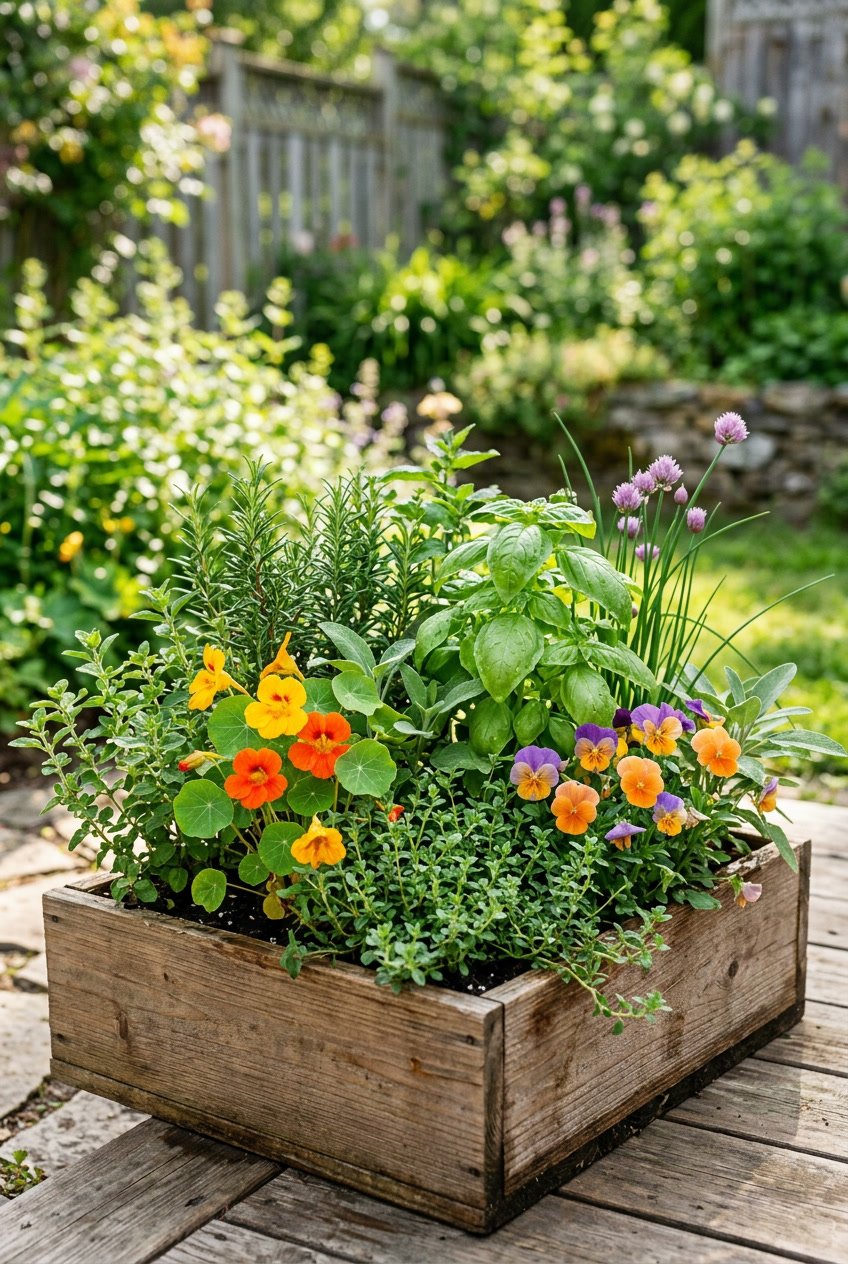
Pick plants that fit your planter’s size, sun, and watering needs. Focus on compact vegetables, aromatic herbs, and a few edible flowers or small fruits to maximize both flavor and pest control.
Compact Vegetable Crops
Pick short, bushy varieties for planter boxes. Try cherry tomatoes (determinate or patio types), baby peppers, and compact cucumbers like Spacemaster 80.
Each plant still needs 5–10 gallons of soil, so use a 12–18 inch deep box for one tomato plus two small companions. Mix root and leaf crops to use depth well.
Pair shallow lettuce or spinach with carrots or radishes—radishes mature fast and loosen soil for carrots. Keep spacing snug but allow airflow: thin leafy greens to 4–6 inches and give peppers 8–10 inches.
Support vining plants if needed. Train small cucumbers up a short trellis to free up surface space.
Use quality potting mix and keep moisture steady; containers dry out faster than beds.
Herb Garden Arrangements
Group herbs by how much water and sun they want. Stick basil, oregano, and thyme together in a sunny box—they all like heat and don’t mind drying out between waterings.
Cilantro and parsley? They prefer cooler soil, so put them in a shadier spot or give them their own container.
Think about how often you’ll snip herbs. Keep chives and scallions up front for easy grabs.
Put bigger, bushier herbs like rosemary at the back or center. That way, they won’t block sunlight from the smaller guys.
Use certain herbs for pest control and flavor. Marigolds or basil next to tomatoes can help with pests, while rosemary and sage chase off plenty of insects.
Clip herbs often to keep them bushy and stop them from bolting—especially basil and cilantro.
Edible Flowers and Fruit
Add color and attract pollinators with edible flowers. Nasturtiums look great spilling over box edges, and their flowers and leaves taste peppery. They even repel some pests.
Calendula and borage fit right into mixed edible gardens—toss their petals in salads or herb beds.
If you want fruit, go for compact choices. Alpine or everbearing strawberries fit well in shallow planters and give you berries all season.
Dwarf blueberries need acidic soil and a deeper box, but you get fruit and a splash of autumn color.
Mix flowers with veggies for a combo of looks and function. Try nasturtiums with squash or peppers—they’ll spill over and help protect the plants.
Dill near cucumbers? It brings in pollinators and can boost your harvest.
Specialty Planter Box Ideas
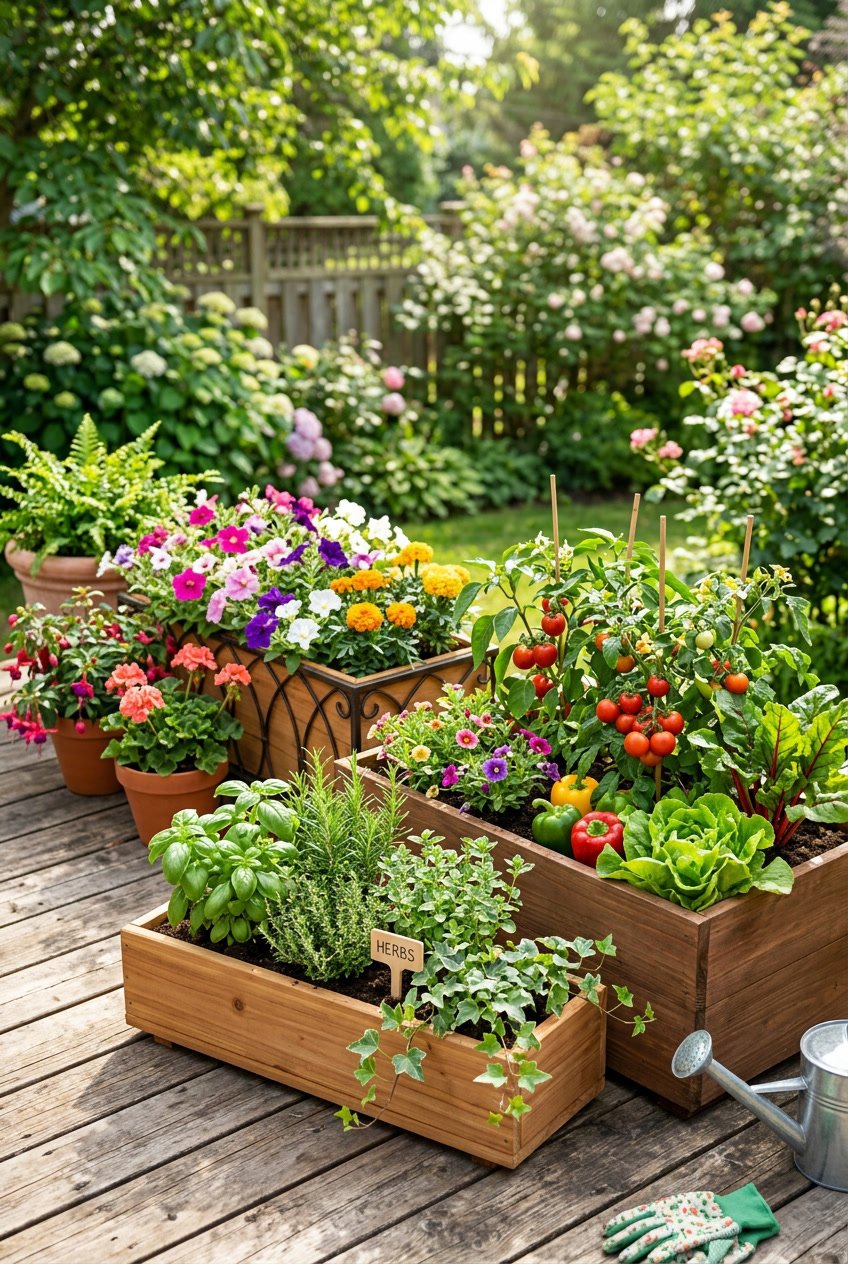
These ideas focus on specific functions and looks. Try low-water containers with succulents, tiny water features tucked into shallow boxes, or space-saving vertical and hanging setups.
Pick your plants and materials based on sunlight, drainage, and how much work you’re honestly willing to put in.
Succulent and Drought-Tolerant Displays
Start with a shallow, wide planter with really good drainage for succulents. Use gritty cactus soil and dump in a layer of coarse sand or pumice at the bottom.
Mix things up—rosette succulents like Echeveria, upright ones like Aloe, and some trailing Sedum for contrast.
Keep plants with similar water needs together. Skip deep pots that hold too much moisture.
Toss a few small rocks or gravel on top to slow evaporation and make it look finished.
Pick one taller “thriller” succulent or a sculptural cactus for drama.
Water sparingly. Soak the soil, then let it dry out completely—especially if you’re using an LED planter, since those trap heat and dry things out faster.
Water Gardens and Unconventional Features
You can set up a mini water garden inside a big, watertight planter box. Try aquatic plants like water lettuce, dwarf lilies, or marginals like horsetail and iris.
Keep the water shallow—maybe 6 to 12 inches—so it’s easy to move around on a patio or deck.
Add a tiny pump to keep water moving and drop in pebbles to anchor roots.
Protect wooden boxes with a sealed liner or use a self-watering reservoir.
If you’re feeling creative, plant ferns or other moisture-lovers around the edges and put submerged plants in the middle for a layered look.
Keep water moving to avoid mosquitoes.
Vertical and Hanging Planter Boxes
Vertical wall planters and hanging baskets let you pack more plants into tight spots. Use modular panels, pocket planters, or stacked boxes for herbs, trailing flowers like calibrachoa, or compact succulents.
Go for lightweight potting mix and make sure your mounting hardware can handle the planter’s weight when wet.
For vertical walls, put taller, thirstier plants up top and drought-tolerant ones lower down to avoid water pooling at the bottom.
Set up drip irrigation or a self-watering system to keep the soil evenly moist. LED planters with built-in lights can help if your balcony doesn’t get much sun.
In hanging baskets, mix a tall “thriller” (like coleus), some “fillers” (petunia), and a “spiller” (dichondra) to balance things out.
Frequently Asked Questions
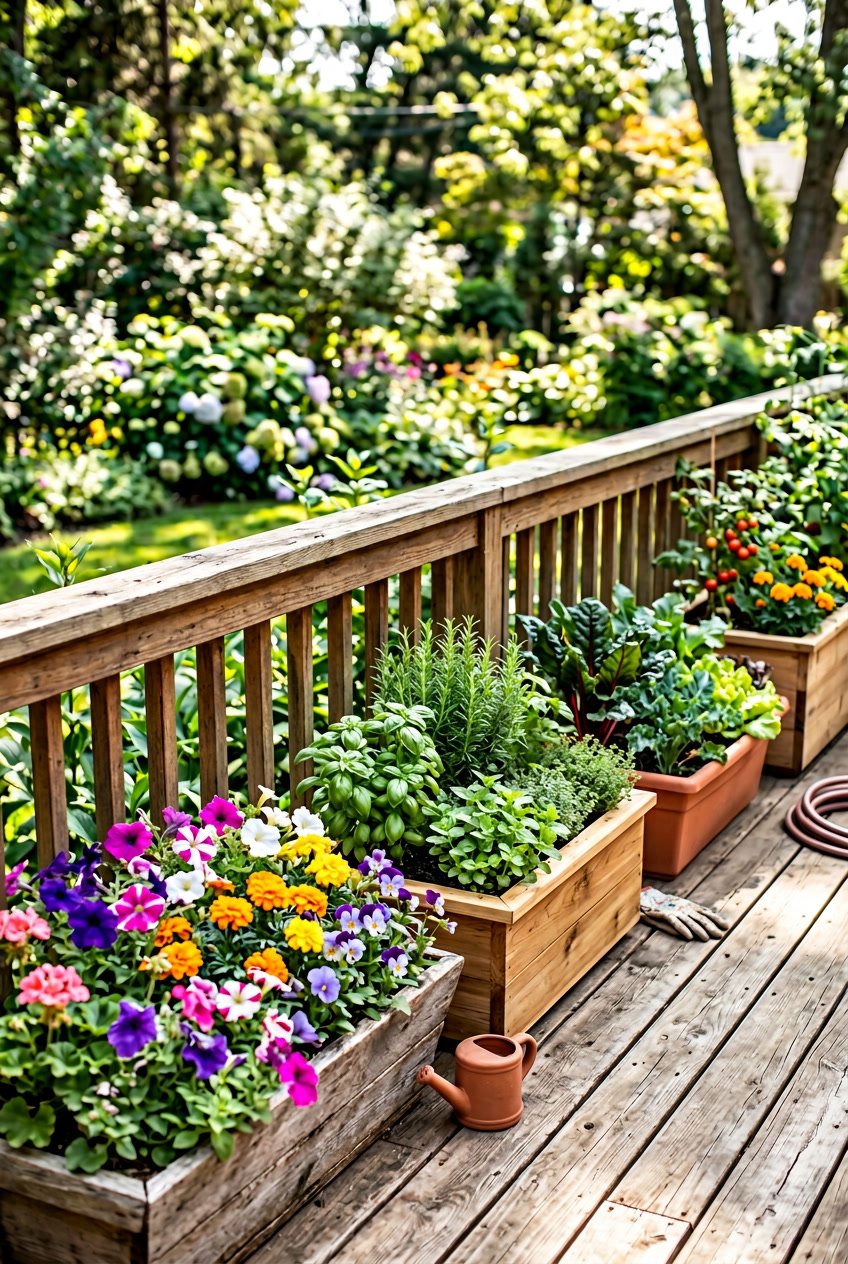
Planter boxes can handle vegetables, herbs, flowers, and even some perennials—as long as you match the pot size, sun, and water needs.
Use a well-drained potting mix, make sure you have drainage holes, and plan to feed and water your plants regularly.
What are the best vegetables to grow in a planter box?
Pick compact or bush varieties—cherry tomatoes, bush beans, lettuce, spinach, radishes, and baby carrots work great.
Tomatoes need a deep box (15–24 inches) and a sturdy stake. Leafy greens and radishes are fine in 6–10 inch boxes.
How can I create a visually appealing planter box with flowers?
Go for the thriller, filler, spiller approach: one tall plant for drama, something mid-height for color, and trailing plants to spill over the edge.
Pick a color scheme—monochrome, analogous, or complementary—and mix up leaf textures for depth.
Which herbs thrive in small planter box environments?
Basil, parsley, chives, cilantro, thyme, and mint all do well in small boxes or on sunny windowsills.
Keep mint in its own pot, though, or it’ll take over. Sun-loving herbs need at least 6–8 inches of soil.
What are some creative ways to arrange plants in a planter box?
Try vertical stacking, tiered containers, or pocket planters on a wall if you’re short on space.
Mix edible and ornamental plants, or try themed boxes like “pizza herbs” (basil, oregano, thyme) or “pollinator flowers” (lavender, salvia, coneflower).
How do I choose plants that will complement each other in a planter box?
Start by matching plants with similar light and water needs. Then, play with height and texture for balance.
Don’t pair a drought-tolerant succulent with a thirsty annual. Keep plants with similar care requirements together.
What are the considerations for planting perennials in a planter box?
First off, choose perennials that can actually handle your local weather. Some just won’t survive if your winters get rough.
Make sure your planter box is deep enough—most perennials want at least 12 to 24 inches for their roots to spread out.
Go for a good-quality potting mix. Add some slow-release fertilizer, because honestly, most plants need a little help.
Think ahead about winter. If your area freezes hard, you’ll probably need to bring the pots inside or find some way to protect the roots.